



Every time two institutions trade digital assets, there is a step that happens after. One party has to send funds. The other has to receive them. Accounts have to reconcile. And until that process finishes, both sides are sitting with risk they cannot fully see or control.
That process is called settlement. And for a long time, there was no clean, regulated, real-time way to do it in the digital asset market.
The networks that existed for that purpose inside traditional banking either collapsed or were shut down. What replaced them was mostly silence.
Lynq Network was built into that silence. Here’s a closer look at what Lynq Network is and why it matters.
The Company That Made It Possible First
Before we talk about Lynq, we need to talk about Tassat.
Tassat is a company that builds blockchain payment systems for regulated financial institutions. Most people outside of traditional finance have never heard of them. But their track record is one of the more significant in the space.
Tassat built the payment infrastructure that powered Signature Bank’s Signet network, one of the first always-on, real-time dollar settlement systems built specifically for the digital asset market. Before Signature Bank collapsed in 2023, Signet had processed over $2 trillion in transactions. Tassat also built TassatPay, which multiple U.S. banks used for real-time tokenized payments.
More than 650 institutional clients had already connected to the Tassat API before Lynq launched, including firms that came in through earlier Signature Bank or Customers Bank deployments. That same operational history is what Lynq was built on top of, rebuilt for the digital asset market, and eventually moved onto a public blockchain.
About Lynq Network
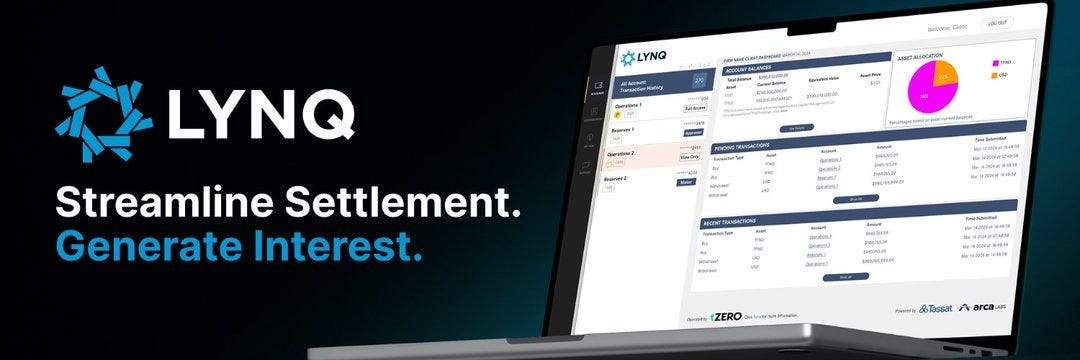
Three companies built Lynq together: Tassat, which handles the blockchain layer; Arca Labs, the innovation arm of a digital assets investment management firm; and tZERO, a regulated broker-dealer. Development took roughly 18 months and included direct input from the institutions that would eventually use the platform.
The platform is operated by tZERO Securities, LLC, which is registered with the SEC as a broker-dealer. Digital asset custody is handled by tZERO Digital Asset Securities, one of only two SEC-registered special-purpose broker-dealers in the United States.
Every participant on the network undergoes KYC and AML verification before accessing any assets, and these assets are held in segregated accounts, meaning each client’s funds are separate rather than pooled. Proof of reserves for the network is publicly visible on Snowtrace, Avalanche’s blockchain explorer, at any time.
Lynq officially launched on July 16, 2025, completing its first on-chain transaction and its first peer-to-peer transfer on the network. From there, adoption built steadily. Fireblocks integrated, Crypto.com completed its integration in January 2026, and Aquanow, DV Chain, GSR, Nonco, and Wintermute became the first to post off-exchange collateral that same month.
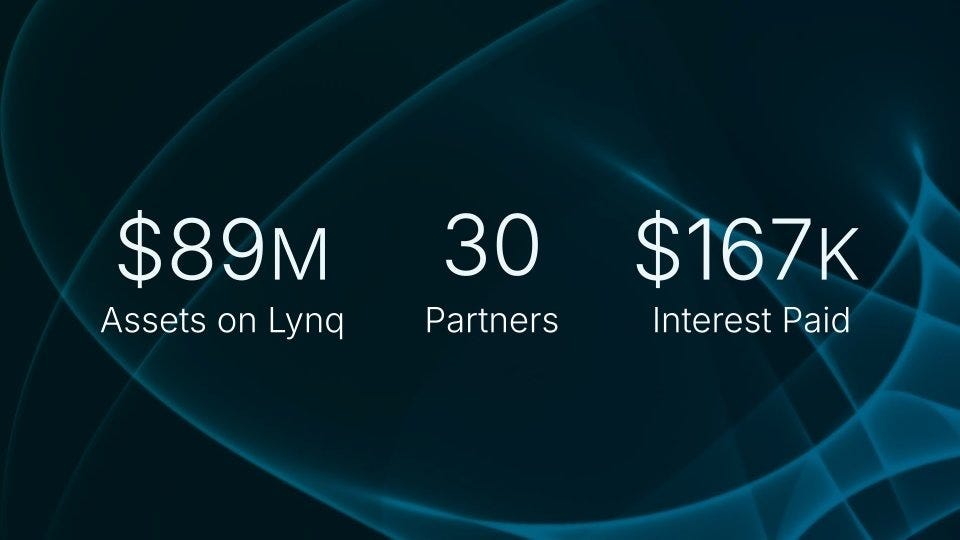
Assets on the platform surpassed $89 million in February 2026, with more than 30 institutional partners onboarded by that point, and EDX Markets joined as a second exchange partner.
The network also launched Collateral Lock, upgraded to a dedicated Avalanche L1 in April 2026, grew TFND assets to $90 million, distributed over $235,000 in interest, and was named a founding member of the Avalanche Payments Collective, cementing its role in advancing institutional payments and settlement on Avalanche.
Lynq Network as an Avalanche L1: What the April 2026 Upgrade Actually Changed
This part is easy to skim past if you are not already familiar with how Avalanche is built, so it is worth slowing down on.
Stage one, July 2025: Lynq launches on Avalanche’s C-Chain
The C-Chain is Avalanche’s main public chain. It is shared by many different projects at once, all secured by the same broad set of validators. When Lynq launched, its first transaction and the TFND fund shares were recorded directly on this shared, public chain.
Stage two, April 2026: Lynq moves to its own dedicated Avalanche L1
An L1 on Avalanche is a separate, standalone chain that is still part of the wider Avalanche network but is not shared with unrelated projects. Tassat chose to run Lynq on one of these dedicated chains instead, which means Tassat decides who validates transactions on it, how it is configured, and who can see what data on it.
The chain still connects back to the public C-Chain, so assets issued elsewhere on Avalanche can still interact with Lynq, but the settlement activity itself now runs on infrastructure built specifically for Lynq’s clients.
Why go through the trouble of migrating instead of just staying on the C-Chain?
Regulated institutions need predictable performance and control over who can access their data before they will use something at real scale. A dedicated L1 gives Tassat that control directly, while a shared public chain does not. Tassat has described the move as being completed with full state continuity, meaning existing client positions and integrations carried over without disruption.
Standout Features
1) Yield-in-Transit
This is what Lynq is probably best known for inside the institutional space. Tassat holds a U.S. patent for it.
When funds sit in a settlement account waiting for a transaction to clear, they normally earn nothing. With Lynq, however, interest accrues every two seconds, at the block level, even while funds are in motion. That is money that would otherwise sit idle, now earning while the settlement is still happening.
2) Collateral Lock
Added in March 2026, this feature lets a participant lock assets as collateral for a counterparty directly on the platform. Those assets stay locked, continue earning interest, and get released when the off-platform action is done. No third-party escrow. No moving capital across multiple accounts and venues just to post a margin requirement.
3) SOC II Compliance and On-chain Transparency
Lynq runs on SOC II-certified technology, a recognized compliance standard requiring independent audits of data security and availability. For institutional clients, this is a standard internal requirement before any platform gets cleared for use. All proof of reserves is on-chain and verifiable by anyone at any time.
Who Can Use Lynq?
Lynq is built for institutional participants, not individual retail users. Its target users include market makers, OTC desks, proprietary trading firms, exchanges, and custodians. Some of the institutions using the network include B2C2, FalconX, Galaxy, Wintermute, Crypto.com, Fireblocks, and EDX Markets.
Onboarding starts with an application through the Lynq website, followed by KYC and AML verification through tZERO, funding a brokerage account, and then settling transactions in real time while earning yield through TFND. Firms that previously connected to Tassat through Signature Bank or Customers Bank can recertify their existing API connection rather than starting over.
Lynq’s Role in the Avalanche Payments Collective
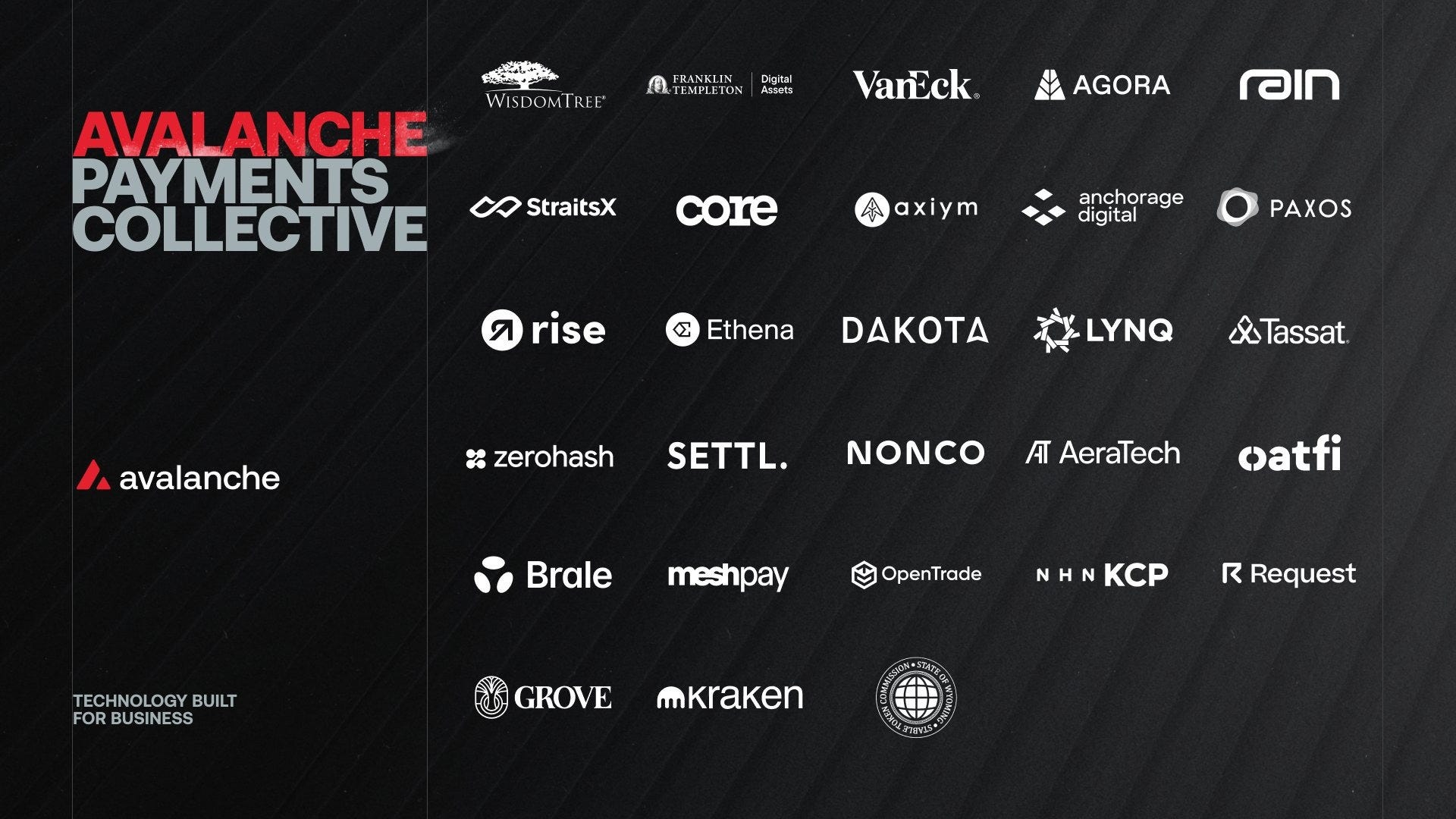
In June 2026, Lynq became a founding member of the Avalanche Payments Collective, a group of 28 organizations building payment infrastructure on Avalanche. The Collective brings together companies across settlement, stablecoins, custody, cross-border payments, and treasury management to support faster and more efficient global payments.

Within that group, Lynq serves as an institutional settlement layer, connecting more than 30 institutional participants and supporting over $2.5 trillion in transaction volume. Collectively, members of the Avalanche Payments Collective support payment flows across 150+ countries, 96 currencies, and approximately 22 billion payout endpoints.
Commenting on the announcement, Lynq CEO Jerald David said the company chose Avalanche because it provides the global reach and institutional-grade reliability needed to power the future of payments.
Final Thoughts
Lynq was built with Avalanche from the beginning. Ava Labs was named a consortium partner months before the platform launched, and the network’s TFND fund combines Avalanche’s public C-Chain with its Layer 1 to support regulated, interest-bearing settlement.
Less than a year after launch, Lynq has grown to $90 million in assets and become a founding member of the Avalanche Payments Collective alongside Franklin Templeton, VanEck, and 25 other organizations.
The network has grown quickly since launch, and its reported metrics will be worth watching over the coming quarters.
To learn more, follow @Lynq_Network on X, explore the Avalanche Payments Collective, and visit the Avalanche website for more updates on the ecosystem.

Looking to join the global community live? Registration is now open for Avalanche Summit NYC. Secure your pass today for 2 days of exclusive keynotes and networking.
