



Floors Finance is a decentralized finance protocol built on Avalanche that proposes a new category of digital asset called fTokens, or floor-backed tokens. The central claim is that these tokens can have a minimum price that only ever rises, never falls. It’s an ambitious idea, and one that hasn’t yet been tested in live markets.
The basic premise works like this: every time someone buys, sells, or borrows using an fToken, a portion of the fees gets locked in a reserve pool. That reserve backs the token’s minimum redemption price. In theory, as activity grows, so does the reserve, and with it the floor price.
How It Works
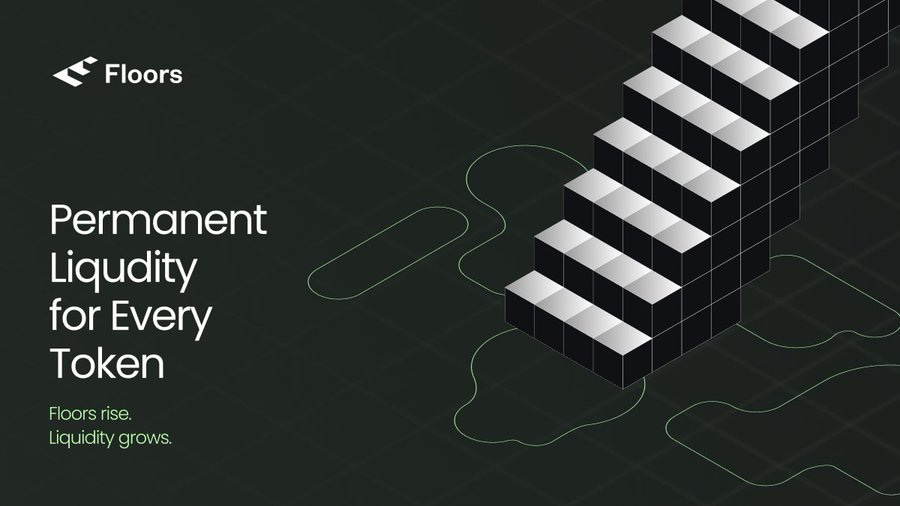
Floors Finance uses a two-pool system:
Reserve Pool: This holds locked assets that define the minimum redemption price. According to the protocol’s design, money flows in but never out, accumulating over time.
Trading Pool: This provides day-to-day liquidity for buying and selling tokens.
When you buy an fToken, part of your payment goes into the Reserve Pool. When you sell, you receive at least the floor price. A pricing formula called a bonding curve determines exchange rates. All protocol fees are routed back into the Reserve Pool, which is how the floor price is supposed to increase over time.
The protocol enforces this through onchain code, meaning the rules are embedded in smart contracts rather than managed by a central party. That reduces some forms of counterparty risk, but it also means that any vulnerability in the code could put the entire reserve at risk.
Token Launches
When a new fToken launches, everyone pays the same entry price regardless of how much they invest. The protocol positions this as a fairer alternative to typical crypto raises, where early investors often get preferential pricing. That launch price then becomes the permanent floor on the primary market.
Users can also amplify their position by borrowing against their tokens and reinvesting, repeating the process up to 20 times. The protocol argues this carries no liquidation risk because the borrowing is against the floor price rather than the market price. That logic holds as long as the floor mechanism itself holds, which is the assumption worth scrutinizing.
Staking and Yield
Token holders can stake fTokens to earn a share of protocol revenue. Unlike many DeFi protocols that pay rewards by issuing new tokens, Floors pays from actual fees generated by activity:
Trading fees (typically 0.3% to 1% per transaction)
One-time loan origination fees
Integration fees from other platforms
Yields earned on reserve assets
Rewards are paid in assets like USDC or AVAX rather than newly minted tokens, which the protocol describes as “real yield.” The size of those rewards, however, will depend heavily on how much trading volume and borrowing activity the protocol actually attracts once live.
Borrowing

The protocol’s lending model allows users to borrow against the floor price of their tokens rather than the market price. Because the floor is designed never to drop, the protocol argues that loans can never become undercollateralized, eliminating the need for liquidations. Borrowers pay a one-time origination fee instead of ongoing interest, with no fixed repayment schedule.
It’s a novel structure, but the no-liquidation guarantee is only as strong as the floor mechanism itself. If the protocol were to experience a critical failure, smart contract exploit, or sustained loss of user activity, the assumptions underpinning that guarantee would be challenged in ways the current documentation doesn’t fully address.
Launch Status and How to Get Involved
As of February 2026, Floors Finance has not launched. The protocol is in pre-launch phase with over 10,000 waitlist signups and a partnership announced with Yield Yak, a DeFi aggregator on Avalanche. No launch date has been publicly confirmed, and no Floors Finance governance token has been issued.
To follow the project or join the waitlist:
Sign up at floors.finance
Follow @FloorsFinance on X for updates
Read the protocol’s blog posts for further details
The team acknowledges the protocol is experimental and lists smart contract risk, market volatility, and regulatory uncertainty among the risks participants should consider.
The Bottom Line
Floors Finance is proposing a genuinely different approach to token economics, one where market activity funds permanent price protection rather than simply driving speculation. The design is thoughtful and the documentation is detailed. But the protocol’s core claims, that floors only rise, that loans never get liquidated, that yield is always “real,” all depend on assumptions that have yet to face a live market. For anyone considering getting involved, understanding how those guarantees are supposed to work is just as important as understanding what happens if they don’t.
Dive into the Avalanche ecosystem today! Download the Core Wallet and unlock a world of seamless DeFi, NFTs, and more.