



In a world where markets run 24/7, traders want capital efficiency, clarity on fees, and custody that never leaves their wallet. TradeSta is bringing that to Avalanche with a perp DEX that goes beyond crypto pairs to include commodities, metals, FX, and even RWA’s, all executed fully onchain.
Perps have matured into the default instrument for leverage on-chain. But most platforms silo assets or hide costs in slippage. TradeSta flips that with flat fees, no slippage fees, and USDC collateral, so users can size risk cleanly and see PnL without guesswork.
What is TradeSta?
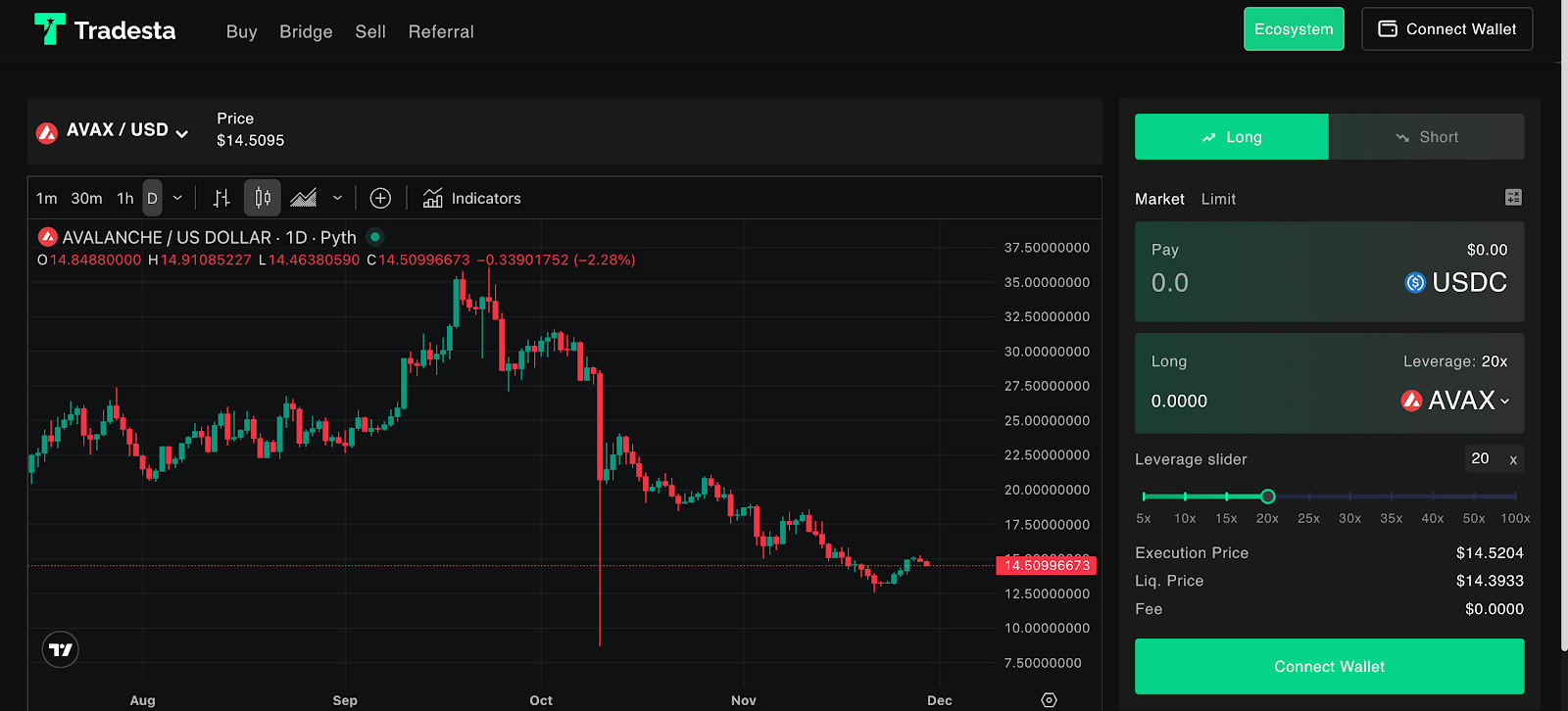
TradeSta is a fully decentralized perpetuals exchange on Avalanche. Every trade, funding update, and liquidation is governed by smart contracts. Users connect a wallet, put up USDC as collateral, and open long or short positions across supported markets with leverage up to 100×. There are no custodians or account sign-ups, just on-chain execution.
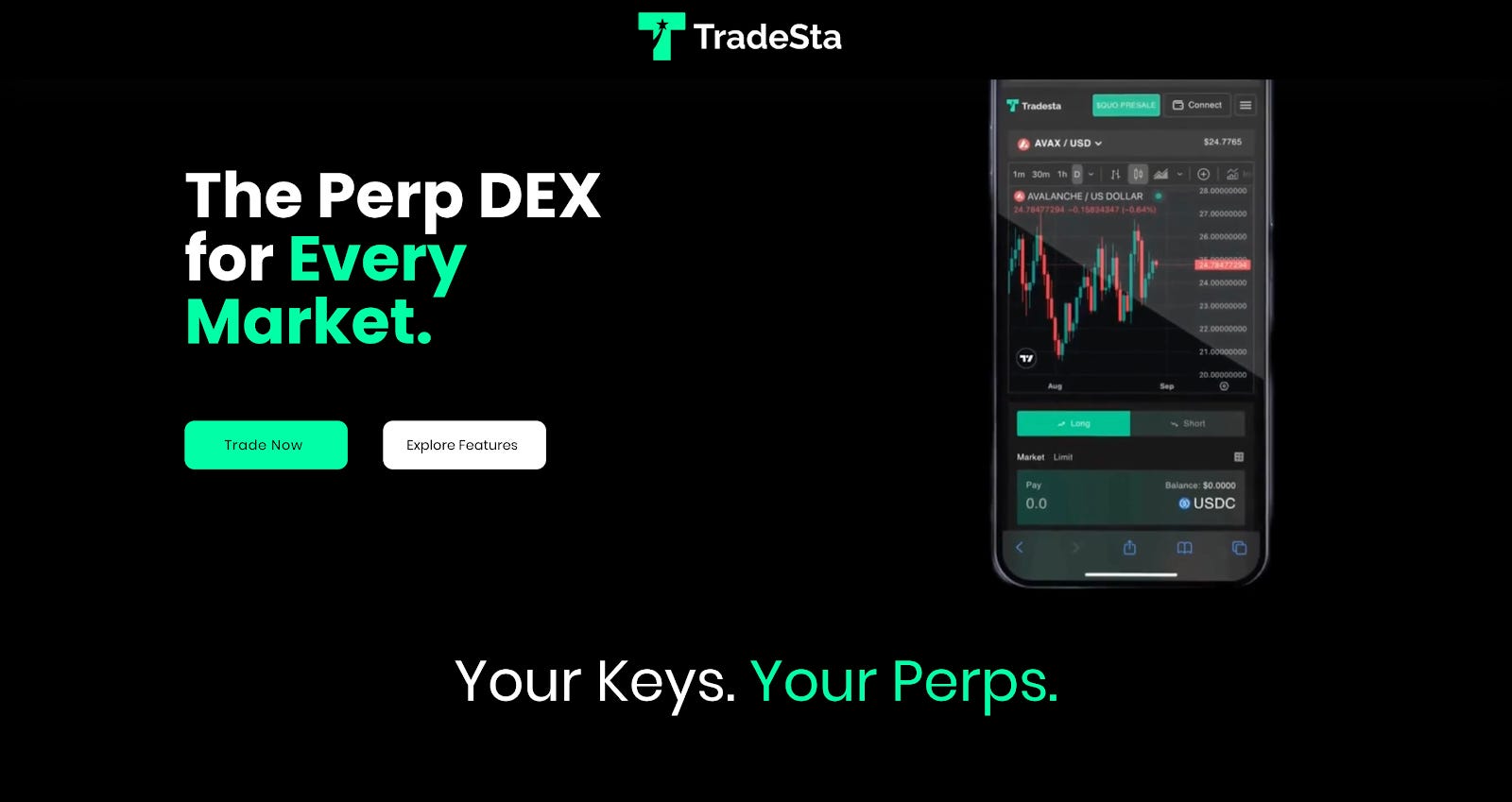
It’s a single platform designed for multi-asset perps crypto plus trad-fi style exposures like commodities, metals, FX, and equities, so traders don’t need to hop across products or platforms to express a view.
Why TradeSta?
Most perp platforms either limit asset coverage or bury price impact in slippage. TradeSta’s flat-fee, no-slippage-fee model and broad market menu target cost predictability and convenience. For users who care about self-custody, execution speed, and transparent liquidation rules, a purpose-built experience on Avalanche’s EVM chain (C-Chain) is compelling.
Simply put, TradeSta is building a one-stop on-chain platform where more markets meet wallet-native trading.
How TradeSta Works?
TradeSta’s performance comes down to smart-contract rails on an EVM chain with fast finality:
USDC collateral & leverage: Users deposit USDC, choose long/short, and set leverage (e.g., 5×–100×). PnL and funding continuously adjust equity; positions close or liquidate by rules encoded on-chain.
Liquidations: When equity falls to the liquidation threshold (losses + funding), positions are liquidated by bots/keepers per contract rules. This process is fully transparent and auditable.
Limit orders: Limit instructions are handled on-chain and execute when market conditions match contract constraints, with funds reserved by the venue’s order logic.
Key Features & Benefits of TradeSta
Multi-asset scope: Trade perps on crypto, commodities, metals, FX, and equities from the same wallet UI without needing separate venues or collateral baskets.
Up to 100× leverage: Optional high leverage on most markets; contract-level risk rules govern margins and liquidation.
Flat fees, no slippage fees: Predictable trading costs help active users plan risk more cleanly than impact-based pricing.
Self-custody by default: Private keys never leave the user’s wallet; there’s no centralized account or escrow.
On-chain transparency: Execution, funding, and liquidations live in contracts users can monitor on the C-Chain.
Who Should Pay Attention to TradeSta?
Active traders seeking capital efficiency across multiple markets with transparent costs and wallet custody.
Quant/systematic users who rely on predictable fees, oracle-driven pricing, and composable contracts to structure strategies.
New on-chain traders who want a clean setup (USDC collateral, limit orders, clear liquidation rules) without juggling multiple platforms.
Compared to Web2 brokers or centralized perps, TradeSta is non-custodial, transparent, and EVM-native. In contrast many Web3 alternatives limit assets or rely on fee models that obscure impact costs.
TradeSta’s Ecosystem Impact: Why It Matters to Avalanche
DeFi breadth: Adding equities/commodities perps expands Avalanche’s market surface beyond crypto, encouraging new users to interact with C-Chain DeFi.
Throughput fit: Fast finality and EVM compatibility let perps run with frequent funding ticks and responsive liquidations. This is critical for user trust.
Composability: Wallets, explorers, and tooling built for EVM just work, lowering integration friction for partners and quants.
What’s Next? (Roadmap & Recent Campaigns)
Collateral Comeback: A two-week promo that refunded 100% of collateral (minus fees) on eligible liquidations.
After the main run, TradeSta announced an extension, citing hundreds of new users, millions in volume, and $10.5K refunded.
Referral program: Ongoing fee-share for referring active traders; details published via official channels and product pages.
Ecosystem participation: The team routinely highlights presence around Avalanche community/Team1 activations via social posts. These updates serve as useful social proof as venue liquidity deepens.
Risk reminder: Perps are complex and high-risk. Leverage amplifies both gains and losses; users should understand funding, liquidation bands, and venue rules before trading.
Conclusion
TradeSta is building a clear, self-custodial path to trade more markets with predictable fees and on-chain transparency. By combining multi-asset perps, 100× leverage, and a clean USDC-collateral flow on Avalanche’s EVM chain, the platform brings a familiar trader experience into a wallet-native form. For users who want breadth without giving up their keys, this is a perp DEX worth watching.
Explore TradeSta: https://tradesta.io
Dive into the Avalanche ecosystem today! Download the Core Wallet and unlock a world of seamless DeFi, NFTs, and more.
Give a try 🔺
I lover Tradesta!