



The automotive world still runs on paperwork, disconnected systems, and low trust. Your car’s history is scattered across dealers, insurers, government agencies, and manufacturers.
To address this, Toyota Blockchain Lab has partnered with Avalanche to build the Mobility Orchestration Network (MON), a blockchain system that manages self-driving fleets, vehicle ownership, and mobility services.
This is the world’s largest automaker making a bold bet that the future of mobility needs a complete digital overhaul.
How This Started: The Journey So Far
Toyota created the Toyota Blockchain Lab in April 2019, long before most companies took blockchain seriously. While other car makers only tried small experiments, Toyota fully committed. The lab worked on testing how useful blockchain could be by running practical trials and collaborating with teams across the entire Toyota Group worldwide.
For years, they worked behind the scenes, testing things like supply chain tracking, vehicle data systems, and digital identities. But they kept running into the same problem: mobility isn’t just about cars or physical movement. It’s a complex system held together by relationships between many players — registration bodies, insurance companies, tax systems, maintenance services, and auditors.
In 2024, Toyota Blockchain Lab introduced the Mobility Oriented Account (MOA) to better understand mobility from the user’s perspective. But they realised it still didn’t solve the bigger problem. So they changed their thinking completely and asked a new question: what if mobility wasn’t about individual vehicles, but about how everything connects and interacts?
That shift in thinking led to the creation of MON.
What MON Is: Structure & Design
MON serves as a foundational operating system for mobility, covering not only vehicles but the full network of interconnected systems and services that support them.
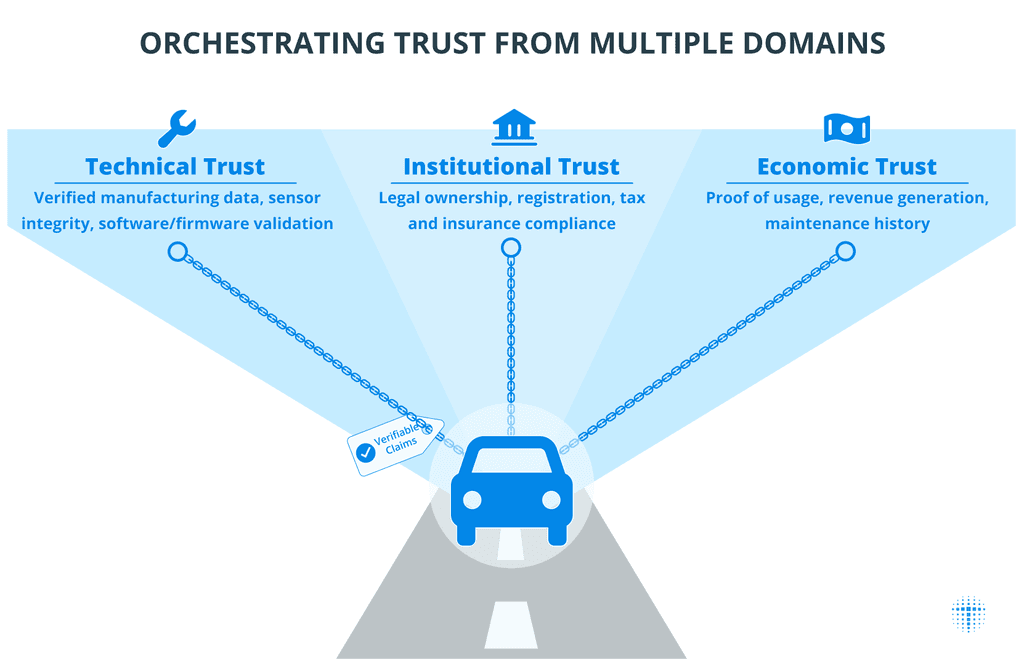
MON collects three key types of information for each vehicle:
- Institutional proof: registration status and insurance compliance
- Technical proof: VIN, manufacturing details, and vehicle data
- Economic proof: usage, performance, and revenue records
All of this is stored in a single Mobility Oriented Account (MOA) on the blockchain.
MON uses a dual-account system designed to balance operational speed with transparency.
The Utility MOA manages real-time activities such as driver verification and everyday vehicle operations, ensuring smooth and efficient functionality.
The Trust MOA records final, verified data that can be audited by investors and regulators, providing a reliable foundation for accountability and compliance.
This structure allows field operations to remain fast and private, while financial and legal records stay secure, transparent, and permanently recorded.
The current MON prototype operates on custom Layer 1 blockchains built on Avalanche, each with a dedicated role. These include networks for issuing security tokens, managing mobility rights, tracking service usage, and handling stablecoin transactions. Although each blockchain performs a specialised function, An Interchain Messaging Protocol (ICM) enables these networks to communicate securely, working together as a unified system.
How It Works
When a vehicle is produced, the manufacturer issues its ownership as an NFT, giving it a unique digital identity connected to its Mobility Oriented Account (MOA).
As the vehicle is used, key events like ownership changes and maintenance are recorded on-chain, creating a permanent and verifiable history shared across stakeholders.
For financing, vehicle data can be grouped into compliant digital assets that investors can trade, allowing the same car to function as both a physical asset and an investment vehicle.
MON uses Avalanche’s Interchain Messaging Protocol to connect different operational networks, enabling secure data sharing, instant payments, and automated verification without relying on a central authority.
What This Means for the Automobile Industry
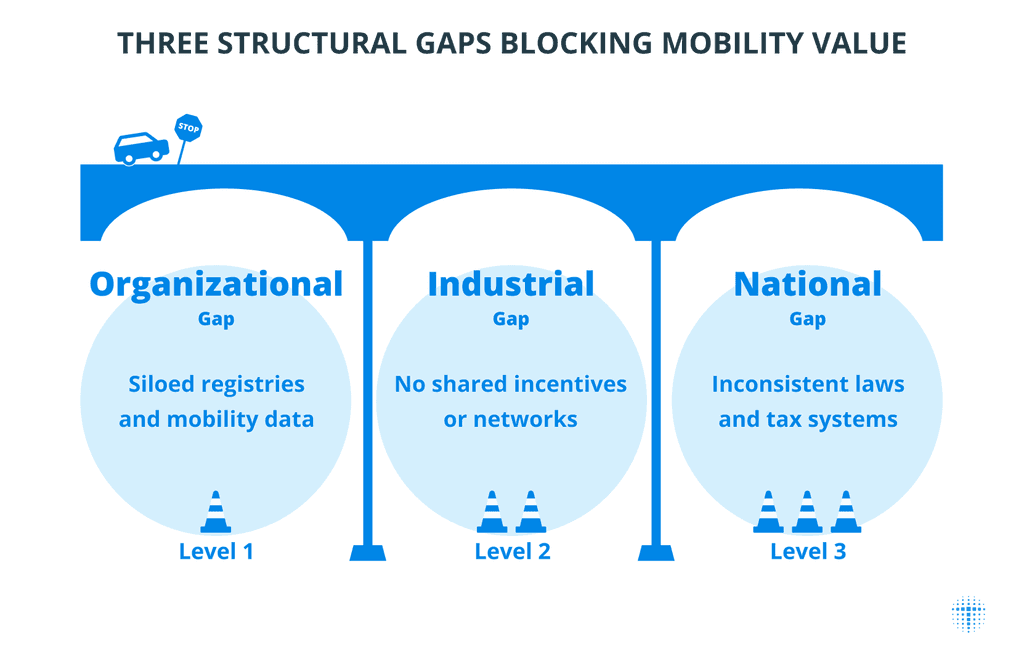
The car industry has three major problems that MON directly solves.
1) The organizational gap:
Vehicle records and operational data are stored in separate systems across governments and companies. Because nothing is connected, this data can’t be properly used for valuation or credit checks. MON creates a single, verifiable source of truth that all stakeholders can trust.
2) The industrial gap:
There is no shared network for all players in the mobility ecosystem to work together. Manufacturers, dealers, insurers, banks, and service providers operate in silos. MON provides one common platform where everyone can connect and collaborate.
3) The national gap:
Different countries have different systems for registration, tax, and insurance, making cross-border verification almost impossible. A car verified in Japan may not be recognised in Germany. MON introduces a standard protocol that countries can adopt locally while staying globally compatible.
Beyond this, MON helps unlock financing for EV fleets in emerging markets by offering trusted on-chain records that attract foreign investors, clear data for autonomous taxi operations, and new ways to monetise electric vehicle fleets as energy storage assets.
These are not ideas for the future. They are real, high-value problems affecting industries worth billions.
Final Thoughts
MON is still a prototype, and Toyota admits there are challenges before it can operate fully in the real world. However, the foundation is already in place.
Toyota produces over 10 million vehicles annually, and its move into MON isn’t about experimenting with new tech, it’s about adapting to a changing mobility landscape and has invested approximately $10.8 million into developing the MON prototype.
By lowering capital costs and enabling fractional ownership, MON could expand access to mobility in emerging markets. For example, someone in the US could invest in a robotaxi fleet in Tokyo, while rural communities could jointly own electric vehicles. This allows capital to move based on opportunity, not location.
For Avalanche, the partnership strengthens its role as core infrastructure. According to a 2025 report by IMARC Group, the Japanese blockchain market was estimated at USD 1.51 billion in 2024, that same report projects the blockchain market in Japan could grow to USD 251.8 billion by 2033, placing Avalanche at the centre of this expanding ecosystem.
The next critical step will be pilot programs, which regulators will rely on before approving large-scale adoption. With Toyota’s global scale and government relationships, these pilots are highly achievable.
With Toyota and Avalanche leading the charge, the direction is becoming clear.
This is what real mass adoption looks like. steady, strategic, and built for the long term.
For more information about Toyota’s MON Blockchain, check here.
Dive into the Avalanche ecosystem today! Download the Core Wallet and unlock a world of seamless DeFi, NFTs, and more.

Toyata On-Chain