



When we talk about building the future of Web3, it’s not just about writing code or launching protocols. It’s about building bridges between technology and the people who will use it, educating the next generation of builders, and creating communities that drive real adoption. In Bolivia, one of the Latin American countries with the fastest-growing crypto adoption, the Avalanche team just demonstrated exactly how this is done.
During a week in October 2024, the “Team1 University Connect” toured two of the most important universities in Santa Cruz and La Paz with a clear mission: to show that Avalanche isn’t just another blockchain, but a platform with relevant solutions regardless of your specialty—whether you’re a developer, economist, or simply someone curious about Web3. What began as a three-event tour became the catalyst for something much bigger: a student movement putting Bolivia on the map of the Avalanche ecosystem.
Three Events, Three Ecosystem Perspectives
Instead of replicating the same generic presentation at each university, the Team 1 Bolivia team designed each event with its specific audience in mind. This personalized content strategy proved key to the tour’s success.
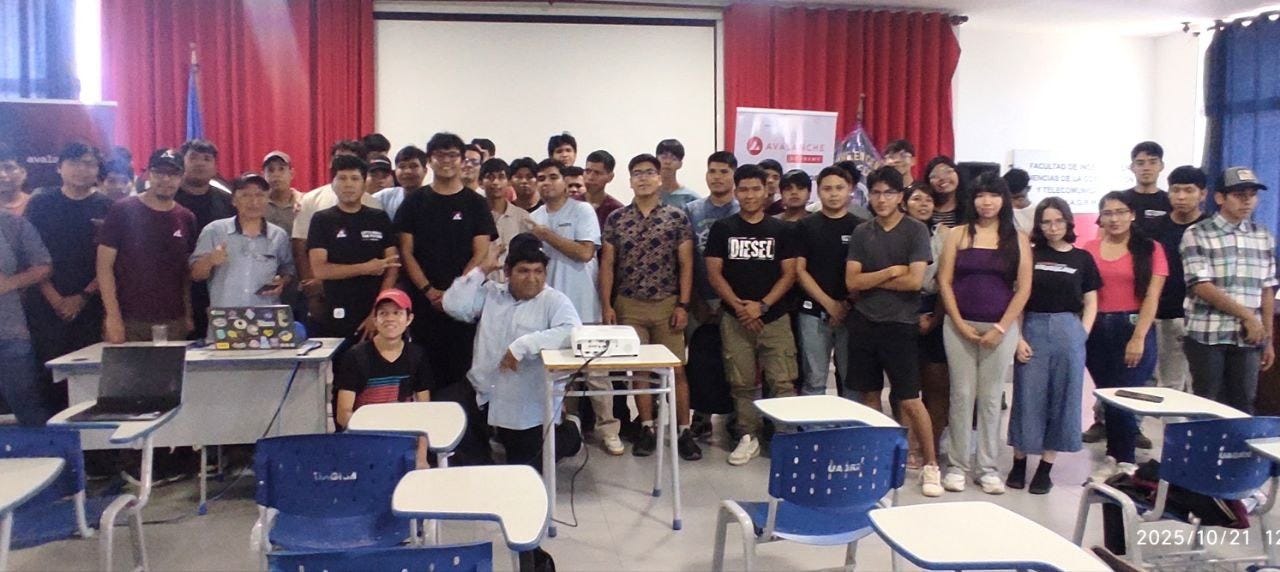
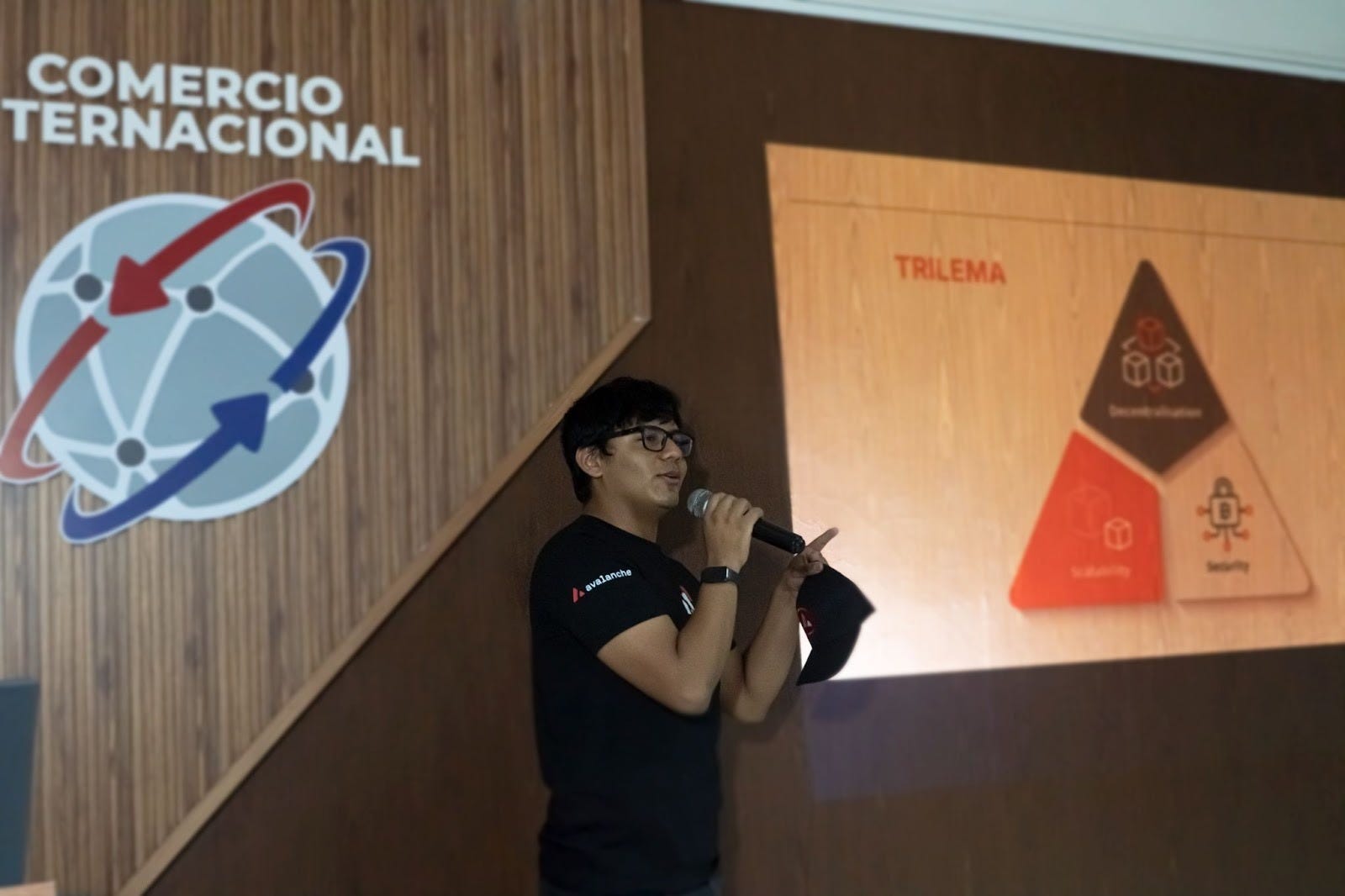
The first event took place on October 21st at the Faculty of Computer Science and Telecommunications (FICCT) at UAGRM, where the room filled with future developers eager to understand how modern blockchains actually work. The format was completely hands-on: the team covered Avalanche’s technical fundamentals, explained in detail the power of Subnets and the C-Chain, and culminated with a live demonstration of dApp development. For many students, it was their first real contact with blockchain development beyond theory.
Two days later, on October 23rd, the focus completely shifted. At the Faculty of Economic Sciences at the same UAGRM, the conversation turned toward business opportunities, projects, and scholarships within the Avalanche ecosystem. The message here was clear: blockchain isn’t exclusive to programmers. They discussed how traditional business ideas can find a home in Web3, from DeFi platforms to real-world asset tokenization. Economics and business administration students discovered that their skills in finance, market analysis, and business strategy are equally valuable in this emerging ecosystem.
The tour closed on October 24th at Universidad Católica San Pablo (UCB) with an event centered on the most important component of any blockchain: the community. The presentation explored how the Avalanche ecosystem functions as an integrated whole, how validators, developers, and users work together to keep the network secure and decentralized, and above all, how anyone can join and start contributing without needing to be a technical expert.
Real Impact, Organic Growth
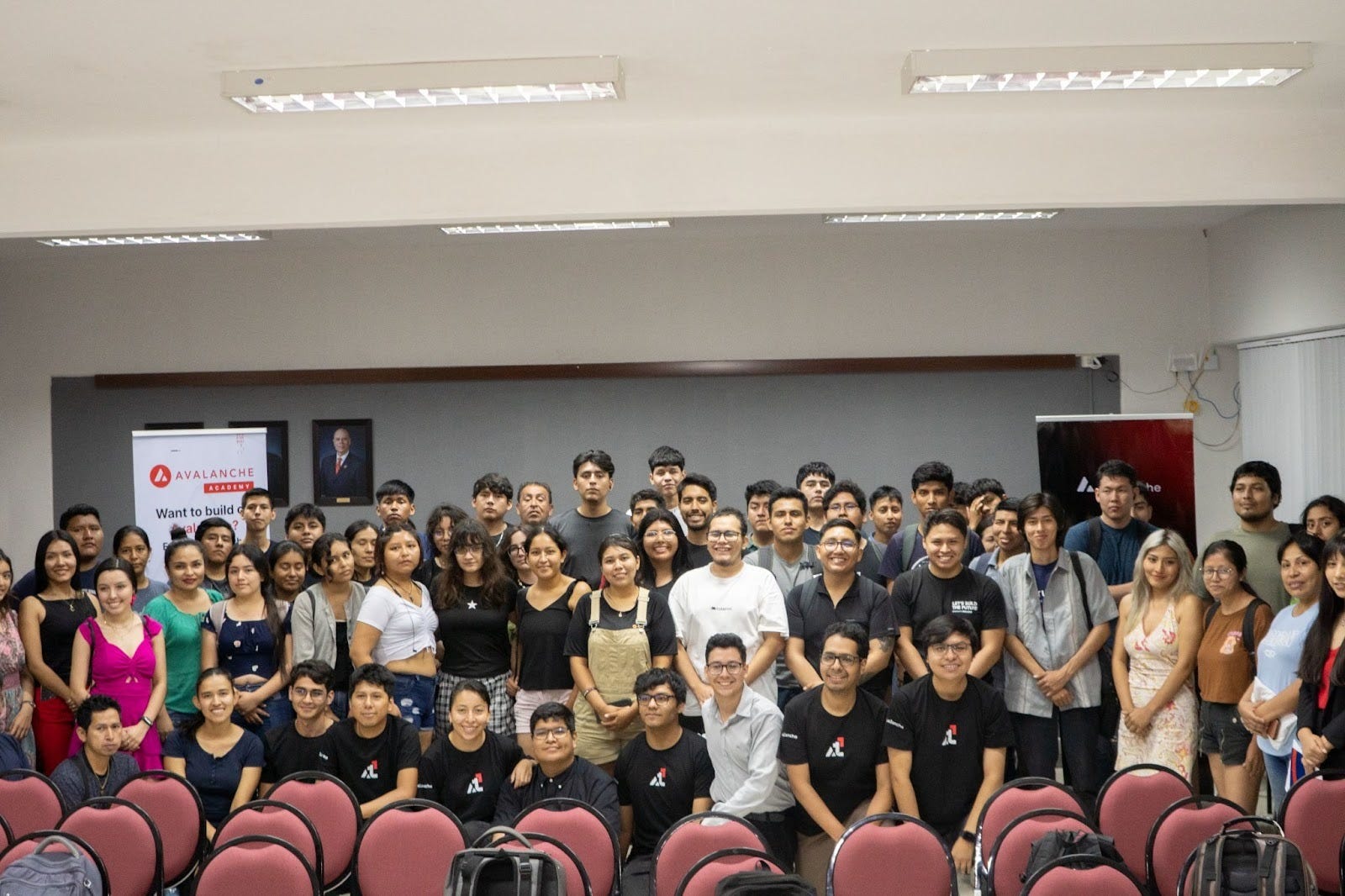
The numbers speak for themselves, but more importantly, they tell a story of genuine interest. The tour registered over 330 enrolled participants with total attendance exceeding 160 across the three events. In an era where it’s easy to inflate metrics with aggressive marketing tactics, these numbers represent something different: people who dedicated their time to learn about Avalanche because they genuinely wanted to be there.
Following the tour, the Avalanche Bolivia community grew by more than 110%. This growth didn’t come from social media spam or mass-sharing group links on TikTok. It was the direct result of quality presentations, relevant content, and real conversations with university students who saw value in what Avalanche offers.
The enthusiasm generated by the events even spilled over into other cryptocurrency groups in the country, where people who didn’t attend began asking about the “Avalanche Card,” a topic the team briefly mentioned during presentations but clearly captured the Bolivian public’s imagination. This kind of word-of-mouth marketing is impossible to fabricate and demonstrates that the content resonated beyond the event rooms.

But perhaps the most significant result came from FICCT at UAGRM. Directly inspired by the technical workshop, the faculty has decided to adopt Avalanche for an upcoming blockchain project in their postgraduate unit. This is exactly the kind of bridge between academia and real adoption that strengthens the entire ecosystem: students will learn by developing on Avalanche, professors will research its technical capabilities, and the university itself will become a knowledge hub for the platform in Bolivia.
Why This Matters for the Entire Avalanche Ecosystem
The success of the “Team1 University Connect” in Bolivia isn’t just a local story. It represents a scalable model of how Avalanche can grow globally through strategic university education. Bolivia joins other emerging markets where crypto adoption is growing rapidly, and Avalanche is positioning itself as the platform of choice for the next generation of builders in these countries.
Universities are breeding grounds for talent and innovation. When an entire faculty decides to build its postgraduate blockchain program using Avalanche, they’re not just educating dozens of students—they’re creating a multiplier effect. These students will become developers, founders, and evangelists who will bring Avalanche to their own companies, startups, and future projects. This is adoption measured in years, not market cycles.
Additionally, the tour’s multi-audience approach demonstrates Avalanche’s versatility as an ecosystem. It’s not just for hardcore developers or DeFi traders. It’s a platform where economists can design new tokenomic models, where entrepreneurs can launch social impact projects, and where everyday users can participate in a fairer and more accessible digital economy. That breadth is what differentiates Avalanche from other blockchains that focus on a single niche.
The Next Phase: From Theory to Practice
The postgraduate project that UAGRM will develop on Avalanche is a unique opportunity for the Bolivian community to build something tangible with academic impact. The Avalanche Bolivia team doesn’t plan to simply deliver documentation and disappear. The intention is to build this project in direct collaboration with the community, whether through synchronous development sessions, open Q&As, or follow-up workshops to solve specific problems that arise during implementation.
This type of support is exactly what converts a one-time event into a long-term relationship. Students won’t just learn to use Avalanche—they’ll learn to be active participants in its global community, contributing code, reporting bugs, proposing improvements, and eventually launching their own projects.
Join the Movement
If you attended any of these events, you’re already part of this story. If you couldn’t make it but this initiative inspires you, there’s still time to join. The most direct way to stay connected, participate in the UAGRM project, and stay informed about future events is by joining the official Avalanche Bolivia group.
This is just the beginning. The “Team1 University Connect” demonstrated that there’s real hunger for quality Web3 education, especially when presented in an accessible and relevant way for different professional profiles. Bolivia is adopting blockchain, and it’s doing so on Avalanche.
We deeply thank UAGRM and UCB San Pablo for opening their doors and trusting this vision. Adoption doesn’t happen in a vacuum—it happens in classrooms filled with curious students, in conversations after the event, in academic projects that become real startups. And in Bolivia, it’s happening right now.
Dive into the Avalanche ecosystem today! Download the Core Wallet and unlock a world of seamless DeFi, NFTs, and more.