



DeFi’s core promise has always been access: sophisticated financial tools, open to anyone, without intermediaries. The reality is more complicated. Yield farming, funding rate arbitrage, and liquidity rebalancing across multiple protocols require constant attention and technical knowledge that most investors do not have. Knidos is built on the premise that this gap should be closed by automation, not effort.
Backed by the Avalanche Foundation and XVentures, Knidos is an onchain asset management platform that hands portfolio execution to AI agents running on smart contracts. It launches on Avalanche, with Base and Ethereum support built in, arriving at a moment when AI-driven DeFi is becoming one of the more serious narratives across the Avalanche ecosystem.
Solving the Black Box Problem
The main objection to AI-managed crypto funds is transparency. Most platforms ask investors to trust performance numbers with little visibility into how decisions are actually made. Knidos addresses this through ZK trade proofs: cryptographic verifications that confirm trades happened correctly without exposing the underlying strategy. The practical outcome is that performance is not just reported, it is provable. In a sector with a history of opaque fund structures, that difference is significant.
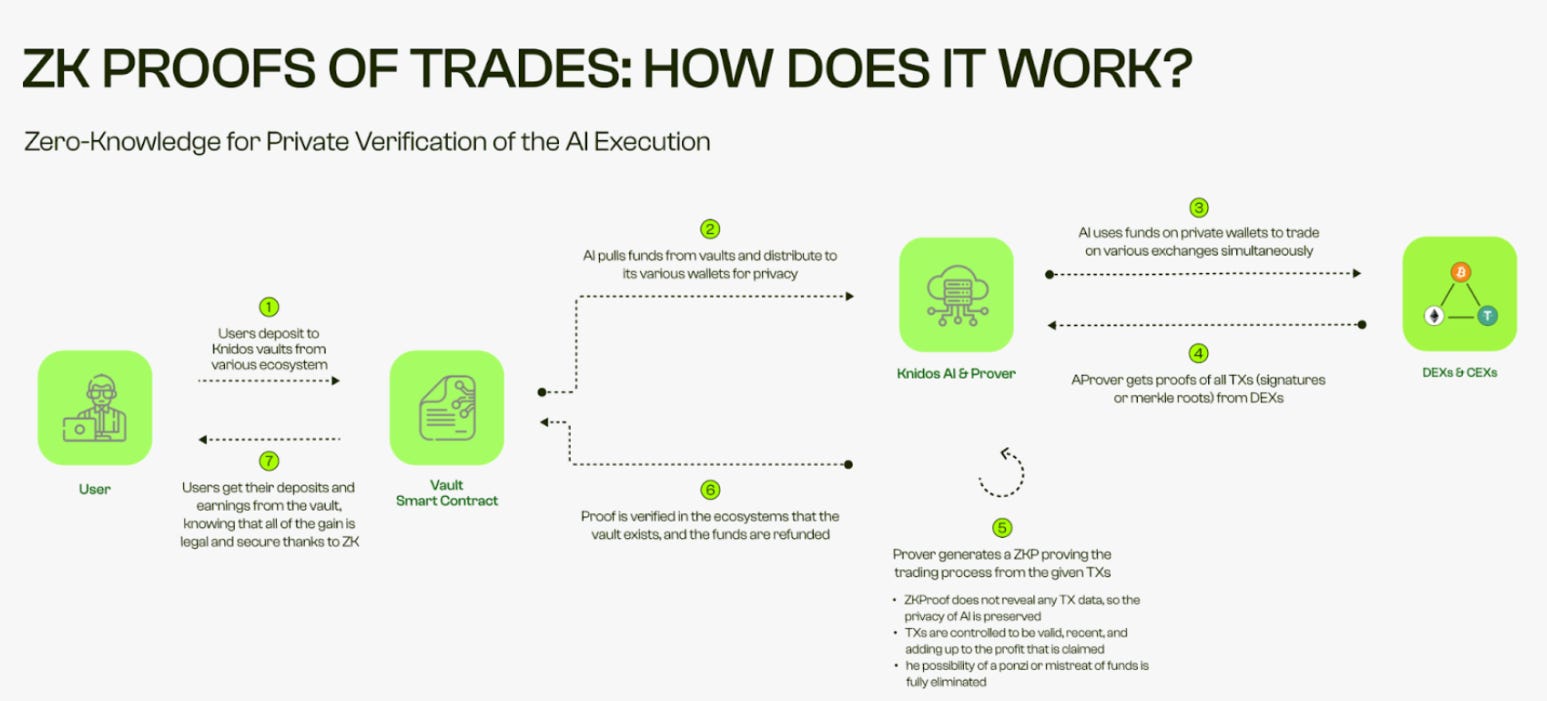
The non-custodial model covers the other side of the trust equation. Funds are held in audited smart contracts, and AI agents work within clearly defined boundaries. They can trade and reallocate within their strategy parameters, but they cannot withdraw funds. Investors keep control of their assets throughout.
Three Strategies, One Autonomous System
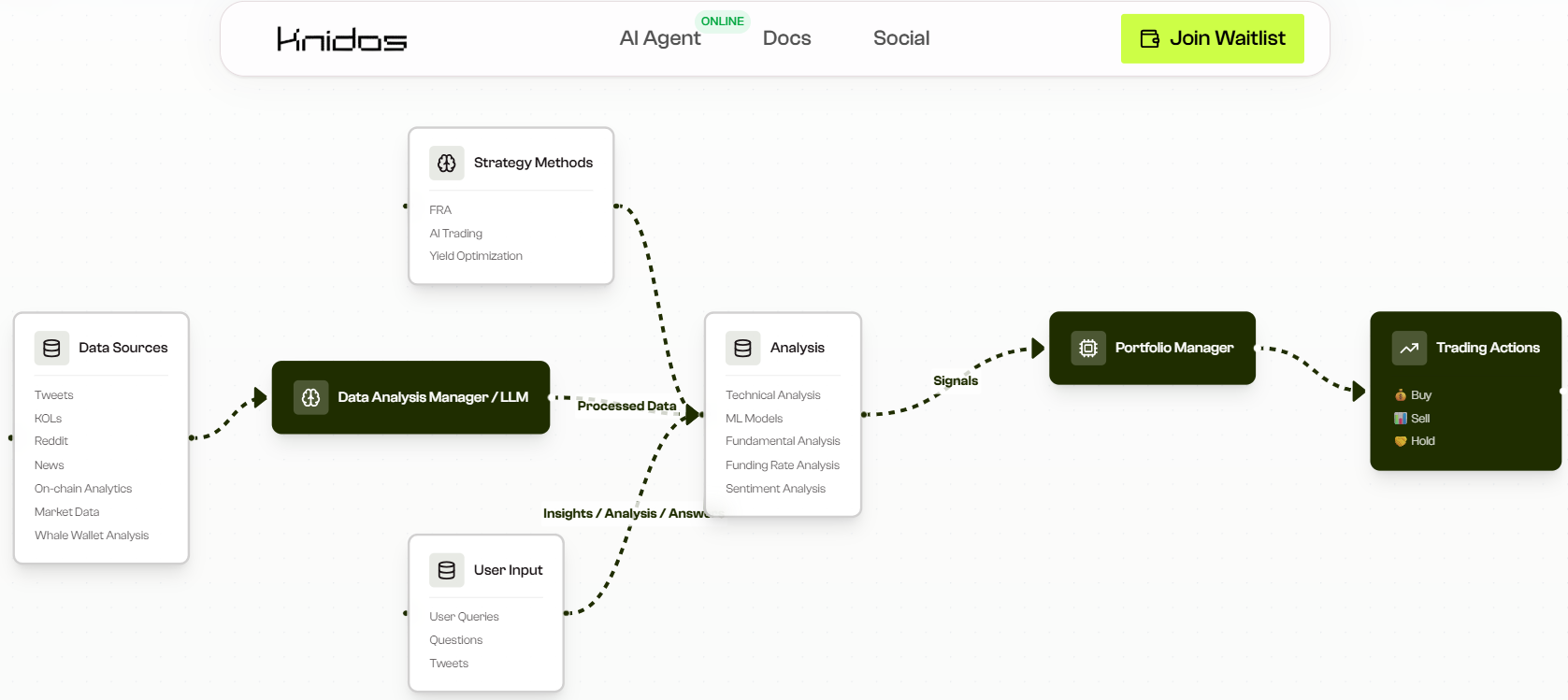
Knidos runs three core strategies, each in its own isolated onchain pool. Funding rate arbitrage captures income from price differences between futures contracts and spot markets. Liquidity pool optimization moves capital across DeFi protocols to find better yields. Active trading executes on major crypto assets based on signals generated by the AI models.
The models pull from on-chain data, exchange order books, funding rates, and market sentiment continuously. Results feed back into the system in real time, so the agents are adjusting to what is actually happening in the market rather than running on fixed rules.
The Avalanche Context
Avalanche’s speed and low transaction costs make it a practical home for a platform that needs to act on market opportunities quickly and cheaply. Beyond the infrastructure fit, the Avalanche Foundation’s direct investment in Knidos reflects a broader ecosystem priority, with autonomous onchain agents treated as a core growth area rather than a side experiment. Knidos is built to expand across other chains over time, but launching within Avalanche puts it at the center of a network that is already moving in this direction.
The Testnet Is Live
Knidos is open for testing now. If you have an invite code, head to testnet.knidos.xyz and use the email you waitlisted with. If you do not have access yet, you can join the waitlist on their website at knidos.xyz. For a deeper look at how the platform works, the full documentation is at knidos.gitbook.io. Follow their X account, @knidosxyz for updates.
Dive into the Avalanche ecosystem today! Download the Core Wallet and unlock a world of seamless DeFi, NFTs, and more.