



The session was supposed to be over.
One hundred and sixty students, a university lecture hall, a slot on AI agents and Avalanche, the kind of format where you expect a third of the room to drift out early and the rest to stay out of politeness. We had reached the end of what we had prepared. We thanked them.
Nobody moved.
Then the questions started, and they did not stop for another two hours.
That afternoon confirmed something I had been circling for a while: the barrier between people and Web3 was never really technical. It was the order of the conversation. We had spent years walking into rooms and opening with the answer, blockchain, to a question nobody in the room had asked yet.
That day we did the opposite, almost by accident.
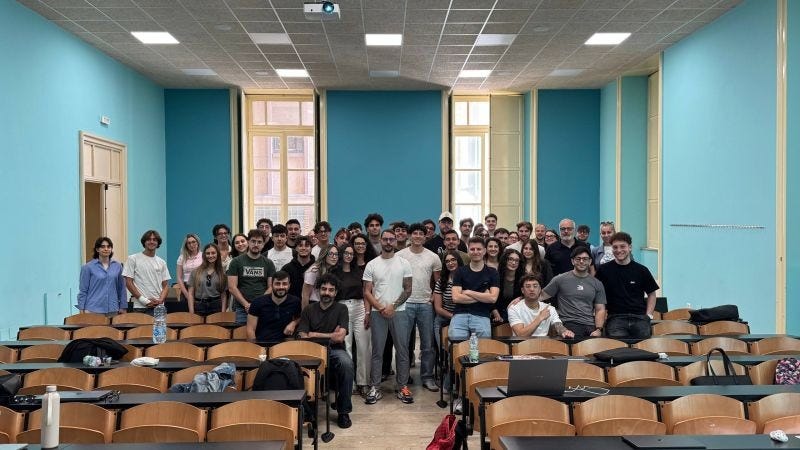
We did not go there to talk about blockchain
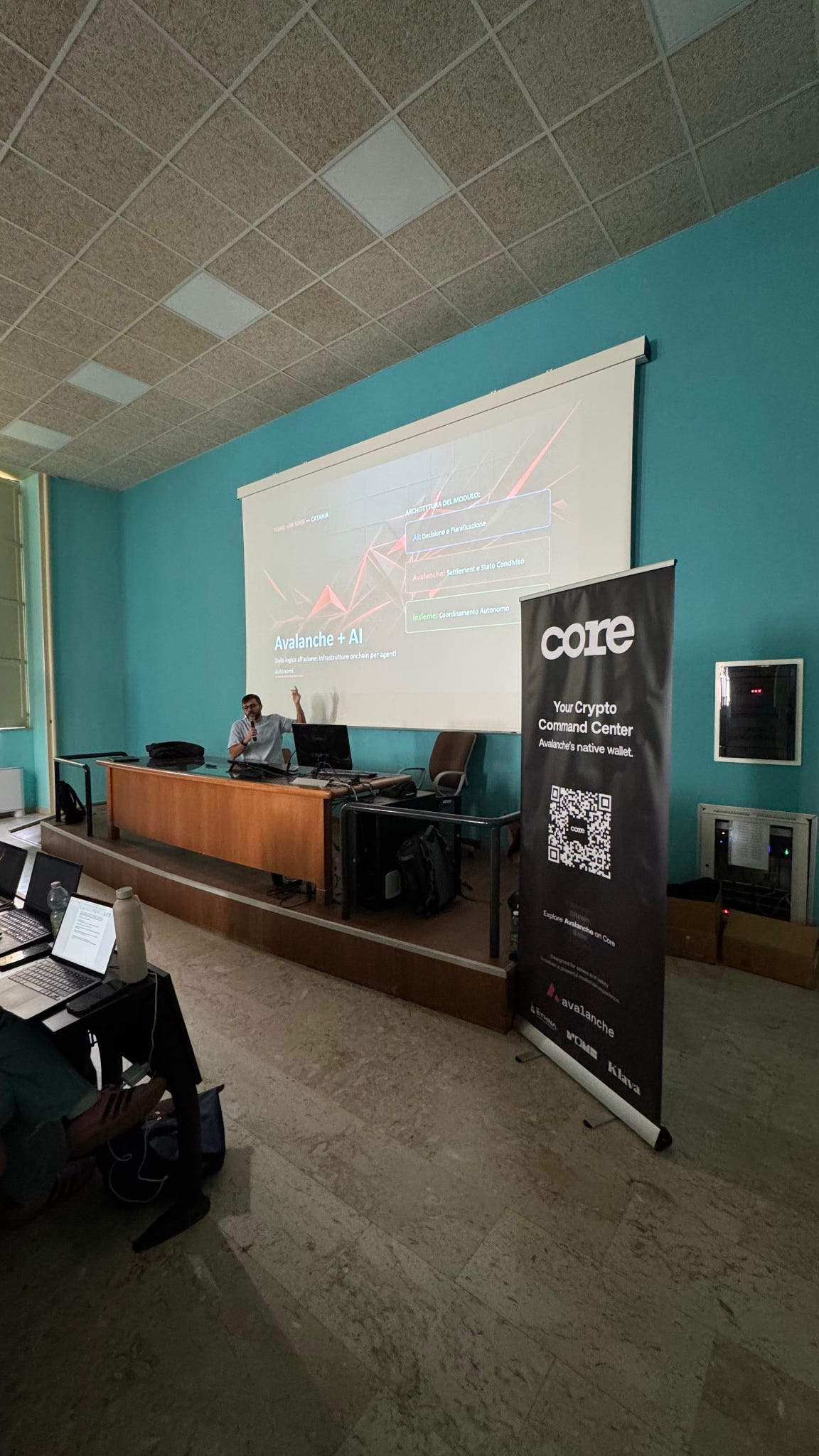
The brief was simple: show students what AI and AI agents make possible, and show them where infrastructure fits once they start building something real.
So we started where they already were. AI can generate an application, automate a process, hold a conversation with a user. An agent can take that further and act on its own. Fine. Then you try to ship it, and a different class of problem shows up: how does this thing handle a payment? How does it touch a digital asset? How does an agent execute a transaction without a developer wiring every component from scratch?
That is the moment Avalanche entered the conversation as an answer to a question the room had arrived at on its own.
When you lead with the chain, you are asking people to care about your infrastructure. When you lead with what they are building, they ask you for it.
The question that stayed with me
Somewhere in those two extra hours, a student asked how technologies this complicated were already running inside companies like Toyota and FIFA, as things that work, used by people who have no idea they are using them.
Underneath that question was a better one: if the user never notices the blockchain, does the user need to understand it?
No. And that single answer should reorganize how this entire industry talks about itself.
The goal was never to turn everyone into a blockchain expert. The goal is to make the technology simple enough that someone with a good idea can use it without learning every layer underneath it. We spent a decade selling comprehension. We should have been selling irrelevance, the good kind, the kind where the complexity disappears into the product.
The most surprising questions that day were not technical at all. Several students asked whether the education they were in the middle of would still be worth anything given how fast AI is moving. That is not a question about tools, but a question about where you can still contribute in an environment that reshuffles itself every six months. They were not asking us to teach them a technology. They were asking us to help them locate themselves.
I did not have a clean answer, to be honest I am not sure a clean answer exists, but it is the reason I think these conversations belong inside universities and not only inside conferences full of people who already agree with each other.
How I ended up in that room
Giacomo Barbieri, Team1 Italy Lead, asked me to join the community because of what I had done before, community work with ETHNA, Binance, Coinbase. I said yes assuming I already knew the job.
I had the mechanics right. I had the shape of it wrong.
What struck me immediately about Team1 was how international and how genuinely mixed it is: different countries, different professional backgrounds, different levels of technical depth, and a default behavior of sharing what you know instead of protecting it. Four events later, as speaker, as mentor, as organizer, I have a fairly specific idea of what this community is for.

It is not for organizing events, because events are only the pretext.
It is for engineering the situations in which people meet, ask the question they were slightly embarrassed to ask, and discover that a technology they had filed under “too complex” or “not for me” is actually within reach.
AI is the catalyst
Almost nobody walks into our events for the blockchain. They walk in for AI. That is the technology everyone is experimenting with, arguing about, trying to fit into their work.
And then, reliably, the same sequence unfolds: someone describes what they are building, someone else asks how value moves through it, how payments are handled, how an agent transacts, what infrastructure a developer would need so that none of this has to be rebuilt from zero.
That is where people discover Avalanche, as something that complements what they are already doing, not as a competing worldview they have to convert to.
The friction was never the technology alone. It was the terminology, the fragmentation, the sheer number of tools and protocols that make it impossible for a newcomer to know where to start. Our job as a community is to reduce that friction to the point where the first question is not “do you understand blockchain?” but “what are you trying to build, and can this help you build it?”
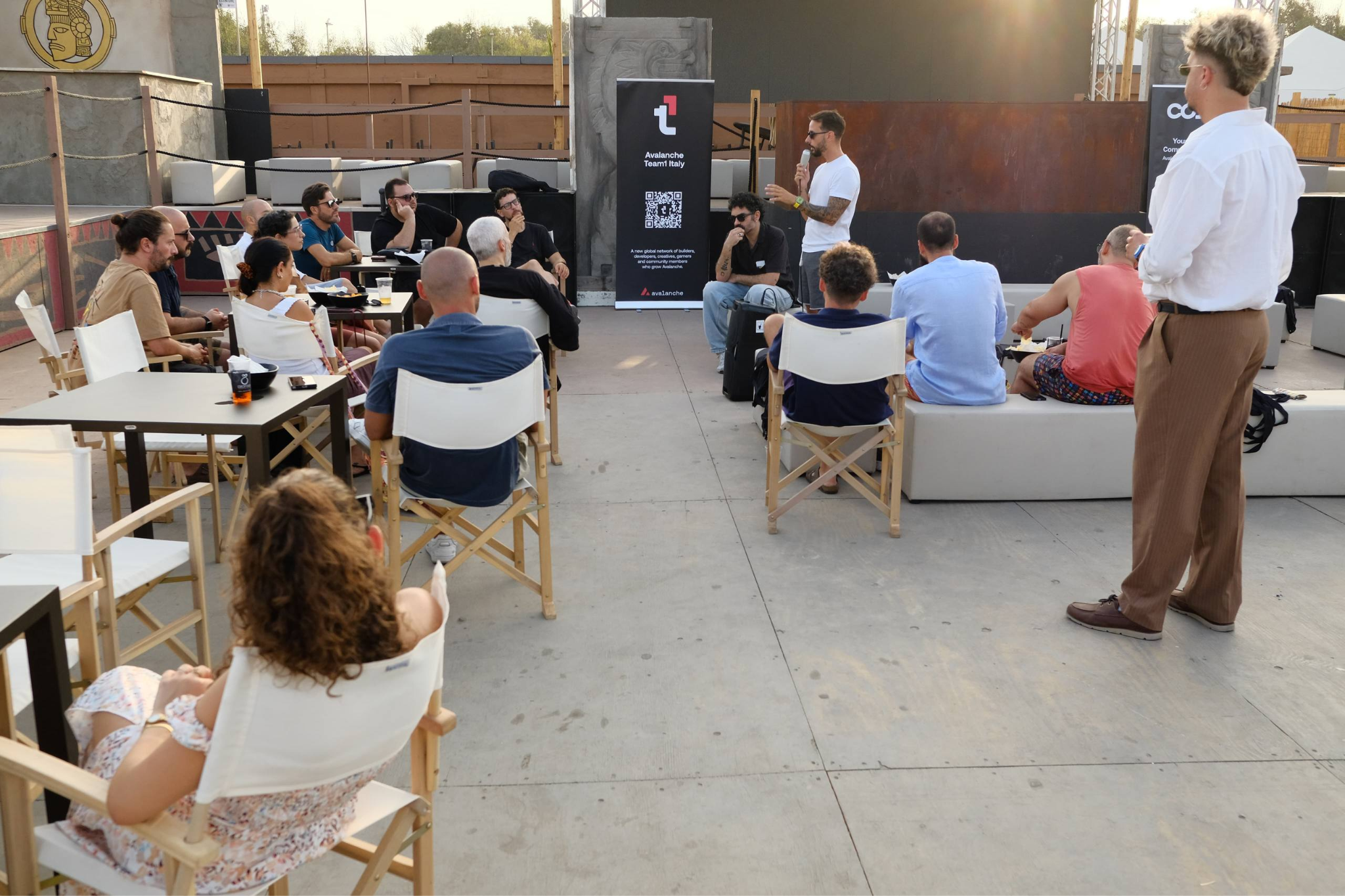
The event is the pretext, the drink is the event
During a workshop, someone asks a technical question, clean, well-formed, safe.
Two hours later, over a drink, the same person tells you what they are actually working on: the limitation they hit last month, the product idea they have not told anyone about, the problem they genuinely do not know how to solve.
Those conversations are consistently worth more than the presentation that produced them. The distance collapses, people become honest about what they do not know, which is the precondition for learning anything.
That is also why I have stopped measuring an event by how it goes and started measuring it by what happens afterwards: a student meets a developer, a founder meets someone with a completely orthogonal skill set. Somebody building with AI figures out how to plug in Web3 payments. Somebody who has never touched a chain realizes they can use one without becoming a specialist. Those connections outlive the room by months.
Three roles, one lesson
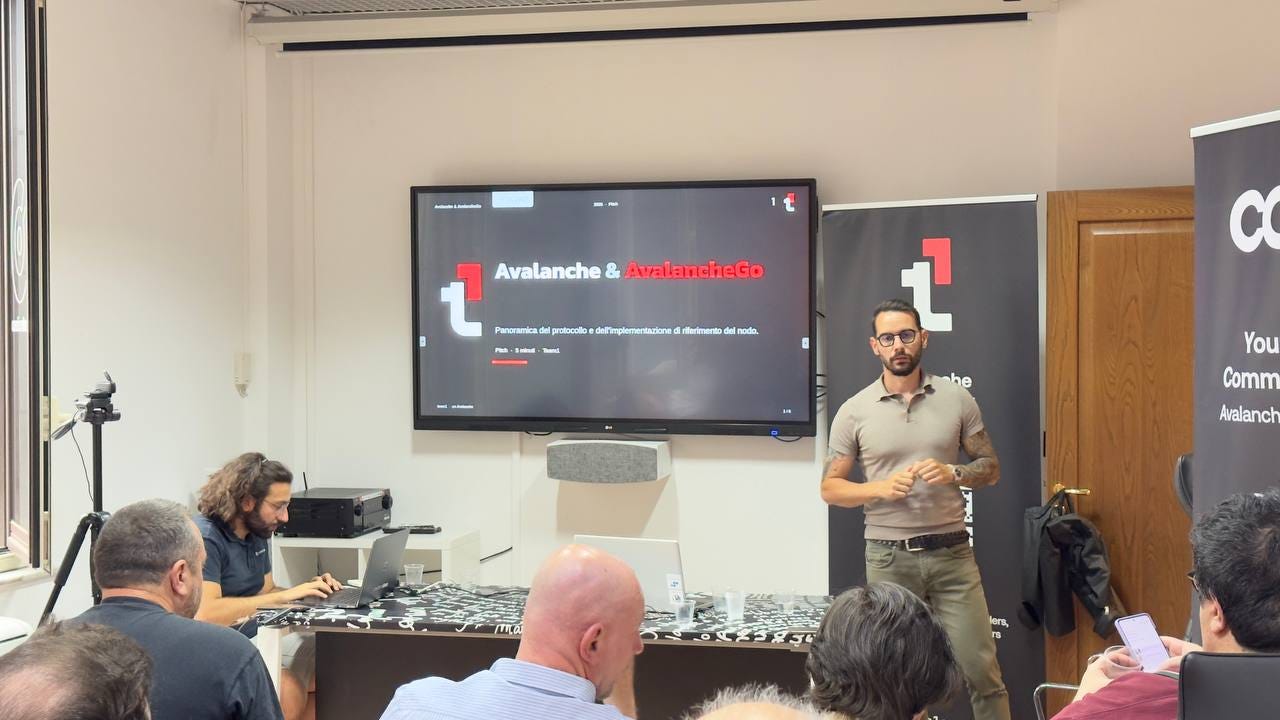
Speaking, mentoring and organizing look like different jobs. As a speaker you explain what we are building and why it matters. As a mentor you drop the general case and work on one person’s specific problem. As an organizer you see the unglamorous machinery it takes to make a spontaneous-feeling conversation possible.
They share one thing: you leave knowing more than you arrived with. I like meeting people whose experience does not overlap with mine. I like hearing how someone from another discipline attacks a problem I thought I understood. And I like that the exchange runs both ways, we are not there only to explain Avalanche, we are there to hear what people actually need. Communities stay relevant exactly as long as they keep listening to the people inside them.
What Team1 actually is
Being Team1 does not mean talking to crypto people.
It means making complex technology accessible to people who have no intention of specializing in it. It means helping someone excited about AI see where Web3 fits into what they are already building, and showing students that the technologies shaping their careers are available to them today. It means helping developers find the tools and the people they need, and giving someone with an idea a place to start.
People describe communities as families a little too easily, and usually they mean everyone thinks alike. Here it is the opposite: it works precisely because the perspectives do not match and people share them anyway. When I need to understand something outside my own competence, there is a group of people I can ask.
Four events is not a track record, I know, but it is a good starting point.
There are still students trying to work out what AI means for their future. Founders building AI products without knowing what Web3 infrastructure could add. Developers with ideas and no obvious first step. People who simply want to understand what is happening to them.
I want Team1 to keep building the rooms where those people meet.
Because the interesting part was never explaining the technology, but what comes after.

Looking to join the global community live? Registration is now open for Avalanche Summit NYC. Secure your pass today for 2 days of exclusive keynotes and networking.
Excellent article @cryptosecco! I loved reading about your experience and all that you are doing to help match solutions to the things people are building!