




Asia’s largest financial institutions have spent years building blockchain infrastructure in isolation. Separate networks, separate standards, separate ecosystems. What is emerging now is different.
Across South Korea, Japan, Hong Kong, Singapore, and Thailand, major institutions are converging on the same infrastructure layer. That layer is Avalanche.
The latest addition is NHN KCP, South Korea’s leading payment processor. It joins TIS, SMBC, KBank, FinChain, StraitsX, and Progmat, a roster that now spans payments, securities, stablecoins, and cross-border settlement across the continent’s largest economies.
NHN KCP: Korea’s Payment Infrastructure Goes On-Chain

NHN KCP processed over $38 billion in annual transaction volume in 2025. The company is co-developing a payment-dedicated blockchain with Ava Labs, built on AvaCloud.
NHN KCP leads the architecture design based on its payment expertise, with Ava Labs handling integration support. The platform delivers three core capabilities:
Sub-one-second payment authorization
Onchain encryption of transaction and settlement data
Dedicated mainnets and digital wallets for each merchant
The result is merchants operating their own payment ecosystems rather than competing for shared blockspace. The infrastructure is also designed to support tokenized deposits and multi-stablecoin settlement, positioning NHN KCP as the central driver for institutional blockchain adoption in Korea.
But Korea is only part of the picture.
Japan

Japan has the most developed institutional footprint on Avalanche in the region.
Progmat, which holds approximately 63 percent of Japan’s cumulative security token issuance, is migrating more than $2 billion in tokenized real estate and corporate bonds from Corda to a dedicated Avalanche L1. The migration is scheduled to be completed by June 2026.

TIS, which handles roughly half of Japan’s credit card transaction volume, has deployed a Multi-Token Platform on Avalanche supporting the issuance of regulated stablecoins and security tokens at the scale Japan’s economy requires.
SMBC is collaborating with Ava Labs to enable stablecoins to move money globally around the clock, bypassing the delays built into traditional correspondent banking.
Hong Kong

Hong Kong is emerging as Avalanche’s institutional RWA hub.
FinChain, a blockchain finance platform under Fosun Wealth Holdings, has launched FUSD on Avalanche, a yield-bearing stablecoin backed by real-world assets including money market funds and government bonds from BNY Mellon, ChinaAMC, and Taikang. Unlike conventional stablecoins, FUSD generates native yield from its underlying reserves while remaining fully liquid within DeFi. Beyond FUSD, Fosun Wealth plans to deploy broader tokenized asset infrastructure on Avalanche, covering issuance, trading, and collateralization of real-world financial instruments.

Animoca Brands and Ava Labs also announced a collaboration in March 2026 to support Avalanche ecosystem growth across Asia and the Middle East, with an initial focus on real-world assets, entertainment, and digital identity. Animoca’s portfolio of over 600 companies gives Avalanche-based projects direct access to institutional distribution channels across both regions.

Singapore
Singapore has become the region’s hub for regulated digital liquidity.
StraitsX, licensed as a Major Payment Institution by the Monetary Authority of Singapore, operates a dedicated Avalanche L1 to settle regulated stablecoins including XSGD and XUSD. Through a strategic partnership with Grab and AliPay+, StraitsX is integrating stablecoin payments across Southeast Asian markets. Merchants receive instant settlement while the blockchain layer stays invisible to the end user.
Thailand
This vision of interoperable, regulated finance is most visible in the cross-border corridor connecting Singapore and Thailand.
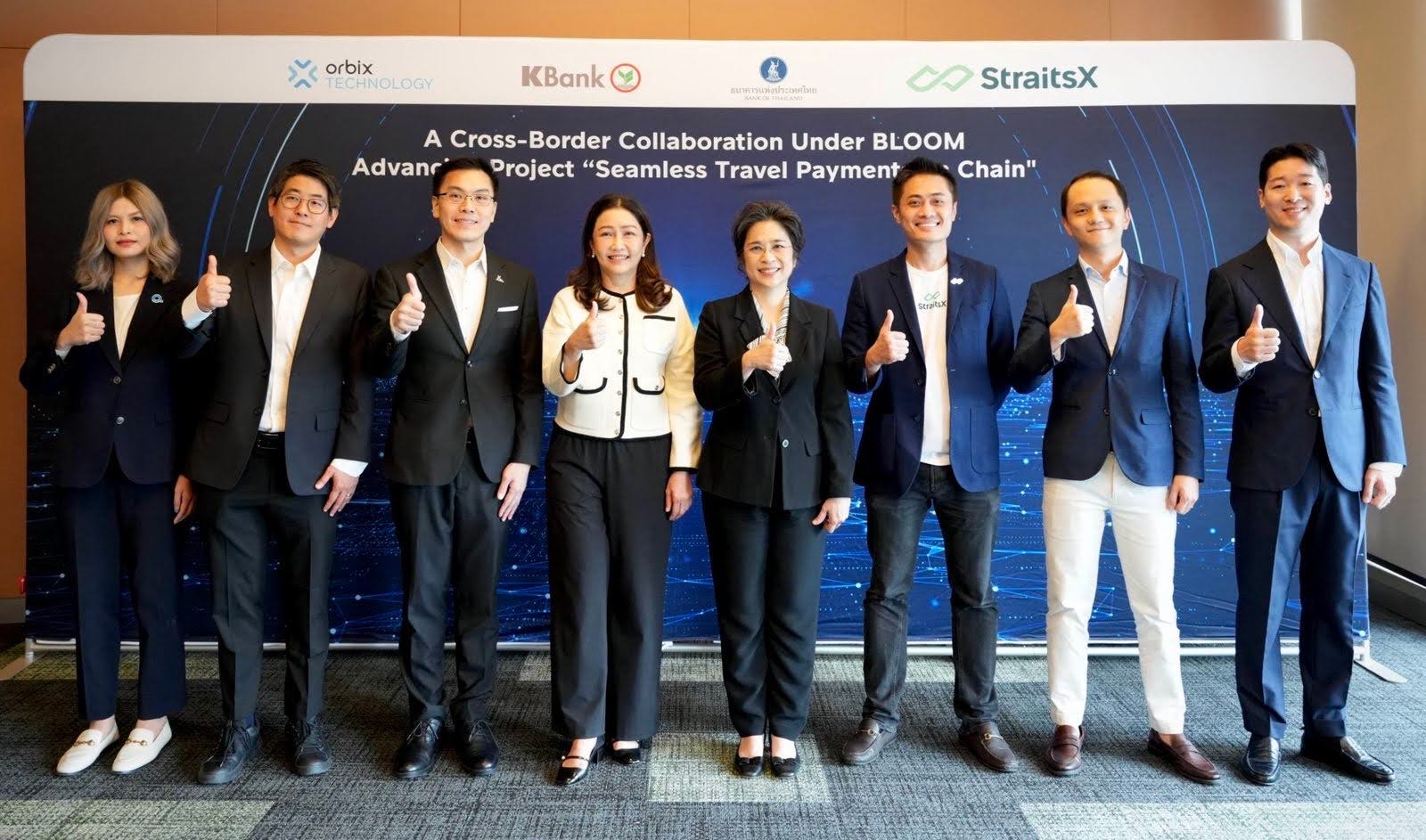
KBank, through its subsidiary Orbix Technology, has enabled live payments between the two countries through its Q Wallet. Thai travelers pay Singaporean merchants via QR code in real time. The underlying foreign exchange and settlement are handled instantly on-chain, through a connection between Quarix, Thailand’s domestic blockchain network, and StraitsX’s Avalanche L1.
Why Avalanche
Each institution arrived at the same answer for the same reason.
Avalanche L1s allow them to define their own rules, select their own validators, and implement their own compliance and privacy layers, without giving up interoperability with the broader network. They get sovereign infrastructure without isolation.
This is the architecture that regulated institutions need. And it is the reason that what started as individual deployments is beginning to look like a regional standard.
Asia’s financial infrastructure is converging. The institutions are real, the deployments are live, and they are all building on the same rail.
Update: Progmat Takes On Japan’s Government Bond Market
One development that was not yet public when this article was written: Progmat is leading the development of a framework to tokenize Japanese Government Bonds.
On May 8, 2026, the company launched the Tokenized JGB / On-Chain Repo Working Group under the Digital Asset Co-Creation Consortium, which it chairs. The target is Japan’s government bond repo market, worth roughly $1.6 trillion. Tokenized bonds handle the collateral. Stablecoins handle the cash. Settlement that currently takes a full business day moves to the same day.
The working group includes BlackRock Japan, SMBC, MUFG, Mizuho, and Daiwa Securities, among others. Ava Labs is on the blockchain infrastructure side. A report is expected by October 2026.
The deployments keep coming.
Dive into the Avalanche ecosystem today! Download the Core Wallet and unlock a world of seamless DeFi, NFTs, and more.