



Tokenization is beginning to move beyond individual assets and into the infrastructure of capital markets themselves.
South Korea is approaching that transition by changing the legal and technical systems that determine how securities can be issued, recorded and managed. In January 2026, its National Assembly passed amendments to the Electronic Registration Act and the Financial Investment Services and Capital Markets Act, establishing a legal framework for securities issued using distributed ledgers.
The legislation takes effect on February 4, 2027. Its initial implementation will focus on selected institutional financial products, unlisted stocks and fractional investment securities, with plans to expand into conventional publicly offered securities as the market develops.
The Korea Securities Depository (KSD) is developing infrastructure designed to connect with Avalanche, Hyperledger Fabric and Hyperledger Besu. Meanwhile, Hanwha Investment & Securities has completed a token securities platform supporting Avalanche and Hyperledger Besu, positioning itself ahead of the regulatory framework’s launch.
These developments offer an early look at how blockchain could become part of South Korea’s regulated securities infrastructure.
From electronic securities to onchain markets
South Korea has made a major transition in securities infrastructure before.
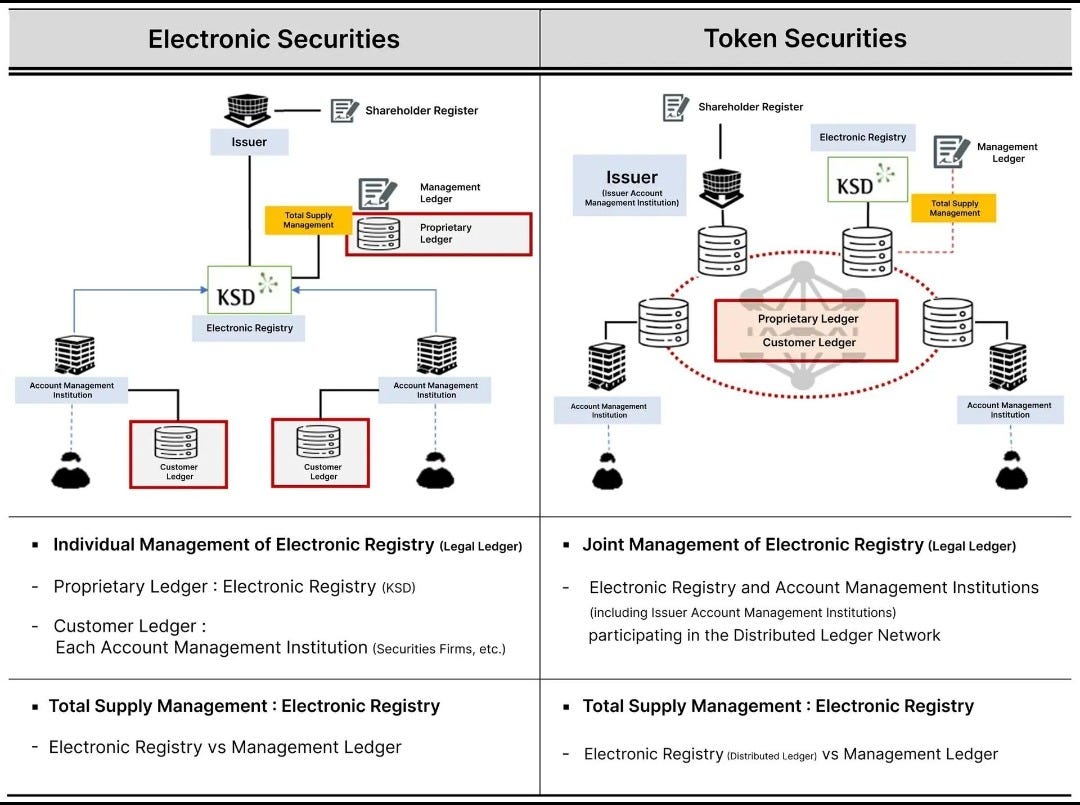
In 2019, the country introduced its electronic securities system, replacing physical certificates for listed stocks and bonds with electronically registered records. KSD became central to that infrastructure, maintaining registration records and supporting the management of securities ownership rights.
The new framework extends that evolution by allowing distributed ledgers to serve as part of the legally recognized recordkeeping system. Tokenized securities will remain subject to existing capital markets laws, including requirements around financial investment activities, disclosure and investor protection.
This creates a path for financial institutions to incorporate blockchain into established securities processes while operating within Korea’s regulatory framework. The transition will happen gradually, beginning with selected financial products.
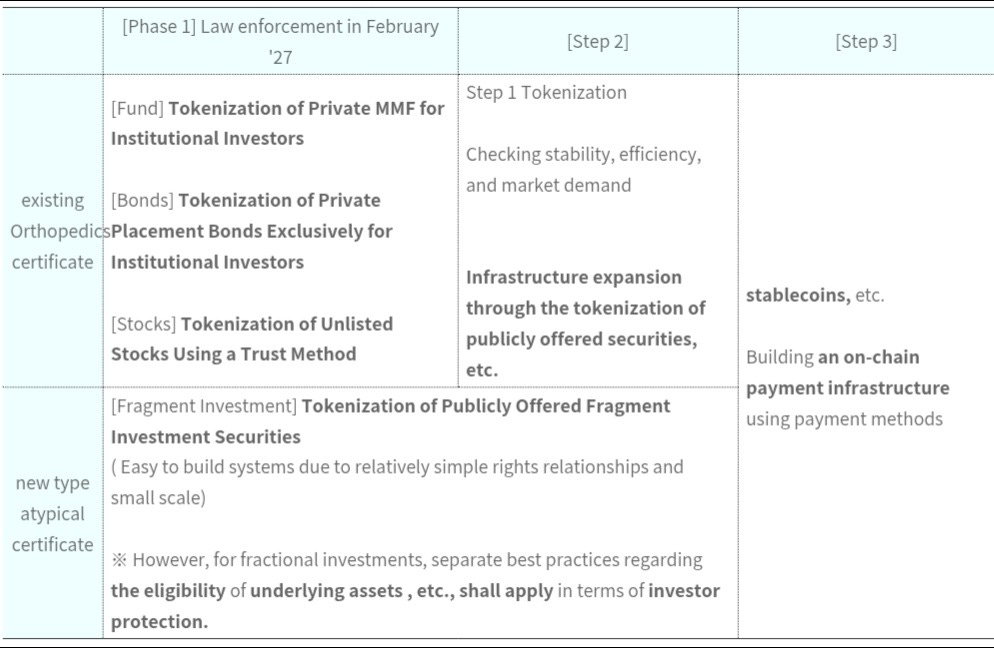
According to the Financial Services Commission’s September roadmap, the first phase beginning in February 2027 will cover privately pooled money market funds and bonds for institutional investors, unlisted stocks issued through trust structures, and publicly offered fractional investment securities.
The second phase is intended to expand tokenization to conventional publicly offered securities. A third phase would introduce onchain payment infrastructure linked to stablecoins, although its implementation depends on regulatory developments and the results of earlier stages.
For financial institutions preparing to participate, the immediate challenge is building blockchain systems that can connect with Korea’s existing securities infrastructure.
That’s where KSD becomes particularly important.
Where Avalanche enters
KSD serves as South Korea’s central securities depository, with responsibilities spanning electronic registration, securities custody and the management of ownership records.
Its role will continue under the token securities framework, with additional responsibilities involving distributed ledger connectivity and the reconciliation of securities issuance and circulation records.
KSD has already completed preliminary work. Between 2024 and 2025, it conducted functional analysis and built a testbed, completing connectivity tests with eight participating organizations. It is now developing the operational platform, with further testing planned before the February 2027 launch.
The technical requirements for this infrastructure include network participation, consensus, security and operational continuity. KSD’s published guidelines identify Avalanche, Hyperledger Fabric and Hyperledger Besu among the technologies its platform is being designed to connect with.
Avalanche’s inclusion also reflects demand from financial institutions.
According to a KSD official quoted by Seoul Economic Daily, several companies requested Avalanche support through the token securities consultative process and existing projects. Those requests contributed to its inclusion among the supported technologies.
Hanwha Investment & Securities offers an early example of how that demand is translating into actual infrastructure.
From demand to actual infrastructure
Hanwha Investment & Securities began developing its token securities platform with FairSquare Lab in 2025.
The platform has since been completed and supports multiple blockchain networks, including Avalanche and Hyperledger Besu. It is being prepared for use under Korea’s upcoming regulatory framework.
Hanwha’s approach illustrates why flexibility matters in institutional blockchain infrastructure.
Financial institutions often need greater control over network participation, validation and governance than public blockchain applications typically require. Avalanche supports dedicated networks where institutions can define participation requirements and validator configurations while using technology associated with a broader public blockchain ecosystem.
That architecture gives institutions options when designing systems around their regulatory and operational needs.
But interoperability remains a major challenge.
Korean securities companies are developing different blockchain systems, and those networks will need to exchange information reliably with KSD’s infrastructure. Industry participants have identified compatibility between distributed ledgers, along with accurate management of securities issuance records, as important issues ahead of implementation.
KSD’s proposed framework addresses part of that challenge by establishing common requirements for participating networks. Its planned infrastructure will allow the depository to participate directly in distributed ledgers and reconcile issuance records across account management institutions.
For Avalanche, the opportunity lies in supporting financial institutions as these connections are established and tested.
What Korea is building toward
South Korea’s first tokenized securities market will be narrower than the long term vision.
Institutional products and selected investment structures come first. Expansion into publicly offered conventional securities will depend on the stability, efficiency and market demand demonstrated during the initial phase.
The Financial Services Commission has also outlined a longer term roadmap for expanding tokenized securities issuance and developing onchain payment and settlement infrastructure.
Onchain payments could eventually become part of that system, potentially using stablecoins to support faster settlement and reduce the separation between securities transfers and payments. The FSC has discussed possibilities including continuous market operations and same day settlement, although these remain future objectives rather than capabilities being introduced in February 2027.
On October 1, the FSC proposed additional rules governing tokenized securities issuance and circulation. The proposals cover eligible securities, requirements for participating institutions and the operation of distributed ledgers shared with KSD.
The public consultation runs from October 2 through November 11, with further approval procedures expected before the framework takes effect in February 2027.
These developments bring Korea closer to its first regulated implementation, although the broader roadmap will take considerably longer to realize.
The bigger picture
The next milestone is February 4, 2027, when South Korea’s token securities framework is scheduled to take effect.
Before then, KSD and participating financial institutions must complete their infrastructure preparations and connectivity testing. Hanwha’s completed platform and Avalanche’s inclusion in KSD’s technical requirements provide early evidence of how that ecosystem is taking shape.
The more meaningful test will come after launch, when institutions begin issuing securities under the new framework and the infrastructure moves into actual operation.
Avalanche is already among the technologies being prepared for that transition.
Dive into the Avalanche ecosystem today! Download the Core Wallet and unlock a world of seamless DeFi, NFTs, and more.