



There’s a concept in blockchain called the Trilemma. First framed by Ethereum co-founder Vitalik Buterin, it describes a trade-off that every blockchain network has to navigate: you can optimize for security, decentralization, and scalability, but achieving all three at once is extraordinarily hard. Make something fast and secure and you often end up more centralized. Make it decentralized and secure and it tends to run slowly.
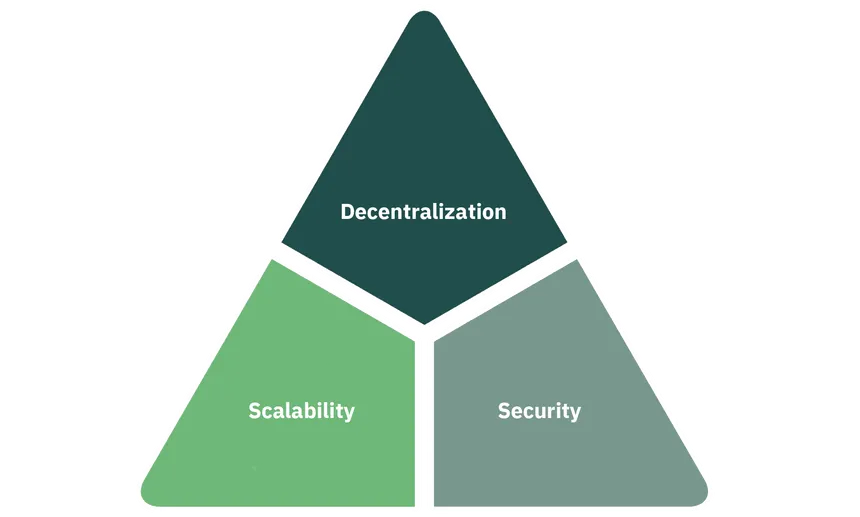
Avalanche was designed from the ground up to challenge that trade-off. Its consensus mechanism, its subnet architecture, and its focus on speed are all aimed at the scalability corner without giving up on the other two. But scalability isn’t just about consensus speed. There’s a quieter bottleneck that doesn’t make headlines: data management.
Every blockchain, at some point, runs into the same problem: the faster it grows, the harder it gets to store and retrieve all that data. Transactions pile up, state grows, and the database underneath has to keep up. Most networks just inherit whatever general-purpose database tools exist and hope for the best.
Ava Labs decided to build something better. That something is called Firewood.
What Is a Blockchain Database?
When a blockchain processes transactions, it needs to store the state of the network: who owns what, what contracts exist, what balances look like right now. That data has to be organized in a way that can be quickly read, verified, and updated thousands of times per second.
Most blockchains, including Bitcoin and Ethereum, use a data structure called a Merkle Tree to organize this. The idea is sound. The problem is that the databases they run on top of (tools like LevelDB and RocksDB) were built for entirely different purposes. They’re general-purpose tools being asked to do a very specific job, and the mismatch shows up as wasted disk space, unnecessary processing, and a constant need to clean up and reorganize data.
That cleanup process is called compaction. It’s a bit like defragmenting a hard drive, except it happens constantly, eats up resources, and slows everything down at exactly the wrong moments.
The bottom line: Firewood does the same job as the traditional stack, but in fewer steps, with less wasted work, and with performance that stays consistent whether the chain has been running for one month or ten years.
Firewood Skips Compaction Entirely
You don’t need to understand the code to understand why this matters. Think of it like a postal sorting center that organizes packages by address: zone, district, street, number. The warehouse system, though, was built for a furniture retailer and only understands product SKUs. So every package arriving gets a SKU stamped on it. Every package leaving gets that SKU decoded back into an address. Then every night, the overnight crew reshuffles the entire floor to reclaim shelf space, while the morning shift is already backing up at the loading dock. The mail gets delivered. Most of the building’s energy, though, goes into translation and reshuffling, not sorting.
The Firewood database isn’t a small tweak. It’s a different philosophy about how blockchain storage should work.
Firewood was built from the ground up specifically for blockchain state storage. It doesn’t sit on top of a generic database. Instead, it stores data the same way the blockchain actually thinks about it: as a tree of nodes, written directly to disk in that shape.
The result: Eliminating the need for manual compaction. Firewood manages free disk space the same way traditional memory management works, reusing space from expired data automatically and efficiently. When the old state is no longer needed, it gets cleaned up. When a new state comes in, it takes that reclaimed space.
For a network like Avalanche, where throughput is already high and the goal is to push it higher, this capability is fundamental to the architecture.
What Changes for the Avalanche Ecosystem
The real-world impact touches validators, developers, and eventually every user on the network.
Validators run leaner. Validator nodes are the backbone of the network. They process transactions and maintain the state of the chain. With Firewood, those nodes spend less time on database overhead and more time doing the actual work. That translates to lower operational costs and more headroom for throughput.
Developers get better infrastructure. Anyone building on Avalanche, whether that’s a DeFi protocol, a gaming application, or a real-world asset platform, benefits when the underlying storage layer is more reliable and faster. Firewood was first built with the EVM (the engine behind Avalanche’s C-Chain) in mind, but its design works for any blockchain that needs a verified, authenticated state.
The network scales more cleanly. One of Avalanche’s core promises is high-throughput, low-latency transactions. That promise gets harder to keep as the network grows and state balloons. Firewood is designed to keep performance stable even as the chain gets larger. That matters a lot for anyone building applications that depend on consistent speed.
Open Source, Open to Everyone
Ava Labs open-sourced Firewood from day one. It was a deliberate choice that reflects how seriously they take community-driven development.
The full Firewood codebase is available on GitHub under an Ecosystem License. Ava Labs has committed to releasing reproducible benchmarks comparing Firewood’s performance against other blockchain databases, so the community can see the numbers for itself.

This matters because the best infrastructure gets better when people can examine it, challenge it, and contribute to it. The open-source release is an invitation for developers, researchers, and validators across the ecosystem to be part of what comes next.
Firewood is currently in beta (the latest release is v0.3.1, from March 2026), so the API is still evolving. But the architecture is in place, and integration into Avalanche’s core components is on the roadmap.
The Bigger Picture
There’s a version of blockchain infrastructure where every network just layers tool on top of tool, inheriting debt from systems never designed for this use case. And there’s a version where someone stops and builds the right thing from scratch.
Firewood is the second version. It won’t make headlines the way a token launch does. But for the Avalanche ecosystem, it’s the kind of work that determines whether the network can actually deliver on its ambitions at scale.
The foundation matters. Ava Labs just made it stronger.
Want to explore?
Head to the Firewood GitHub repository and star the project. For a deeper look at what Ava Labs is building across the Avalanche ecosystem, visit avax.network.

Looking to join the global community live? Registration is now open for Avalanche Summit NYC. Secure your pass today for 2 days of exclusive keynotes and networking.