



Avalanche is preparing another protocol upgrade, but this time the focus isn’t on faster transactions or new features. Instead, it’s about the network’s economic model.
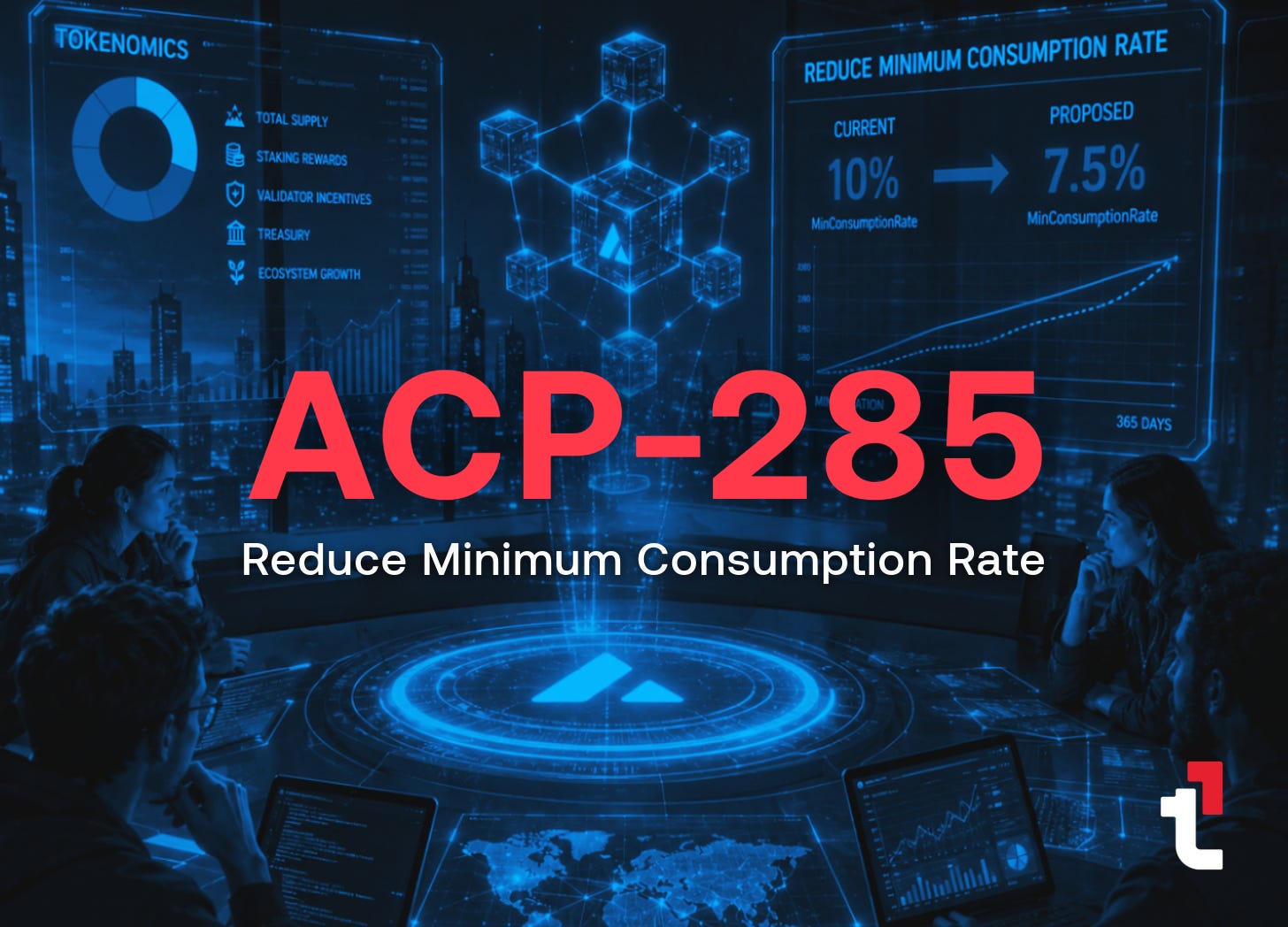
ACP-285 (Reduce Minimum Consumption Rate) proposes a change to how staking rewards are calculated. While the adjustment may seem small, it is designed to encourage longer staking commitments, reduce the rate at which new AVAX is issued, and improve the long-term sustainability of Avalanche’s staking system.
If approved, ACP-285 will become part of the upcoming Helicon upgrade alongside ACP-236 (Continuous Staking) and ACP-273 (Reduced Minimum Staking Duration).
What Is an Avalanche Community Proposal?
Avalanche Community Proposals (ACPs) are how protocol upgrades are introduced and discussed within the ecosystem. Rather than implementing changes immediately, proposals are published publicly so validators, developers, researchers, and community members can review them, ask questions, and provide feedback before they are adopted.
ACP-285 is currently in this discussion phase, meaning there is still an opportunity for the community to help shape the proposal before it becomes part of a future network upgrade.
How Avalanche Staking Rewards Work
When you stake AVAX on the Primary Network, your rewards depend partly on how long you commit your stake.
Avalanche calculates staking rewards using two key parameters:
Minimum Consumption Rate: the reward floor for shorter staking periods.
Maximum Consumption Rate: the highest reward available for staking the full 365-day period.
Today, these values are 10% and 12%, meaning the difference in rewards between shorter and longer staking commitments is relatively small.
What Does ACP-285 Change?
ACP-285 proposes lowering the Minimum Consumption Rate from 10% to 7.5%, while leaving the Maximum Consumption Rate unchanged at 12%.
The proposal only affects new staking periods that begin after it takes effect. Existing staking positions would continue under the reward parameters that were in place when they started.
By lowering the reward floor while keeping the maximum reward the same, Avalanche aims to create a stronger incentive for validators to commit to longer staking periods.
Why Was This Change Proposed?
The proposal has three primary objectives.
Reduce Inflation
Staking rewards create new AVAX.
By lowering rewards for shorter staking periods, ACP-285 aims to reduce the amount of new AVAX issued through staking over time. Lower inflation would reduce dilution for existing holders while helping preserve more rewards for future validators.
Encourage Longer Staking
One of the goals of ACP-285 is to strengthen the incentive for validators to make longer commitments to securing the network.
Under the proposed changes, shorter staking periods would receive lower rewards, while the maximum reward for a full 365-day commitment would remain unchanged. This creates a stronger economic incentive to choose longer staking durations instead of frequently rolling over short-term positions.
Strengthen Long-Term Network Security
Avalanche has a fixed maximum supply of AVAX, meaning staking rewards come from a finite pool of tokens.
By slowing the rate at which new rewards are distributed, the proposal aims to preserve more of that supply for future validator incentives, helping support the network’s long-term security.
Why Is This Happening Now?
ACP-285 is closely linked to two other proposals included in the Helicon upgrade.
ACP-236 introduces continuous staking, allowing validators to automatically renew their staking positions instead of manually restaking every time a staking period ends.
ACP-273 reduces the minimum staking duration, making short-term staking strategies much easier.
While both proposals improve flexibility and user experience, they also make short-duration staking more attractive. ACP-285 acts as a counterbalance by increasing the economic advantage of staking for longer periods.
Together, these proposals aim to make staking more flexible while maintaining incentives that support the network’s long-term security.
Who Could Be Affected?
Long-term validators may welcome the proposal because the maximum reward for one-year staking remains unchanged while the overall issuance of new AVAX could decrease.
However, validators and delegators who prefer shorter staking periods would receive lower rewards under the proposed model.
Some community members have also raised questions about how the proposal could affect liquid staking protocols such as sAVAX, along with DeFi strategies that rely on shorter staking cycles. These discussions remain ongoing as the proposal is refined.
How Can You Get Involved?
ACP-285 is still under active discussion, giving the Avalanche community an opportunity to provide feedback before the proposal is finalized.
If you’re interested in Avalanche staking or validator economics, you can:
Read the full proposal and supporting documentation.
Join the GitHub discussion and share your feedback.
Attend community discussions covering the proposal and its rationale.
Follow future updates as the Helicon upgrade moves closer to activation.
Whether you’re a validator, delegator, builder, or simply an AVAX holder, understanding these proposals can help you make more informed decisions about the future of the network.
Final Thoughts
ACP-285 is not a dramatic overhaul of Avalanche’s staking system. Instead, it is a targeted adjustment that aims to better align staking rewards with long-term participation.
By lowering rewards for shorter staking periods while preserving the maximum reward for long-term staking, the proposal seeks to encourage longer staking commitments, reduce inflationary pressure, and make the distribution of staking rewards more closely reflect the security provided by longer-term validators.
The proposal is still open for community discussion, making now a good time for validators, delegators, builders, and researchers to review the changes, weigh the trade-offs, and help shape one of the key economic updates planned for the Helicon upgrade.

Looking to join the global community live? Registration is now open for Avalanche Summit NYC. Secure your pass today for 2 days of exclusive keynotes and networking.