



Online gambling is a large and growing industry, with the global market exceeding $100 billion annually. Yet for all its scale, the technical infrastructure beneath most platforms remains closed. Randomness is generated internally, payout logic is invisible, and players have no independent way to verify that a game’s outcomes are fair. They are asked to trust the operator.
CX Chain is attempting to change that arrangement. Launching as a purpose-built Layer 1 blockchain on Avalanche, the platform is designed to handle the core functions of a casino, including randomness generation, liquidity management, and settlement, directly at the protocol level rather than through operator-controlled systems.
How the Architecture Works
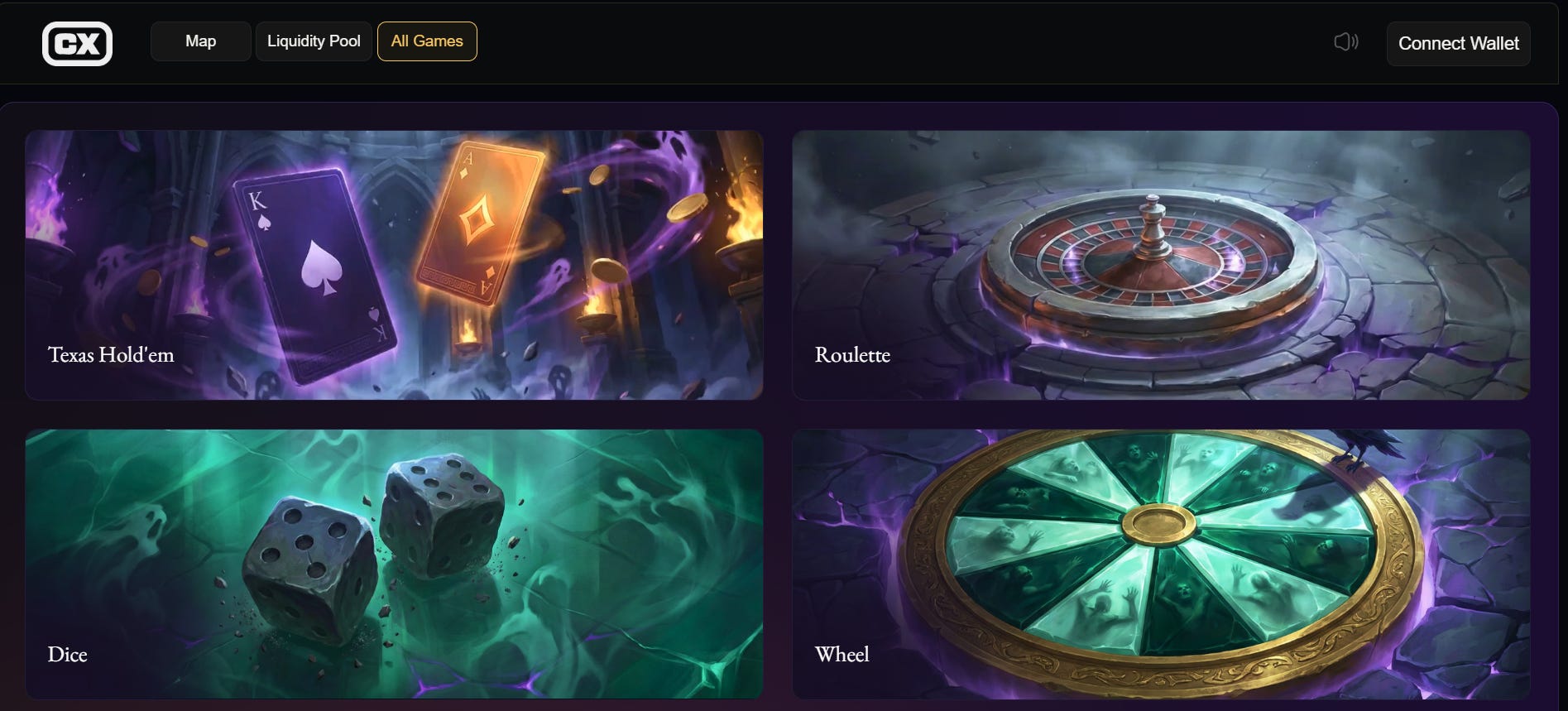
The platform’s flagship product is Texas Hold’Em poker. In this implementation, shuffle and hand logic are processed entirely onchain using zero-knowledge proofs, meaning every shuffle can be independently verified after the fact. The same principle extends to roulette, dice, wheel, and other games that depend on random outcomes. Randomness is sourced and recorded through verifiable mechanisms rather than internal systems.
On the liquidity side, traditional casino models concentrate financial risk and reward with the operator. CX Chain replaces that with shared liquidity pools governed by smart contracts. When a player bets, the protocol draws from the pool to cover a potential payout. If the player loses, the funds return to the pool automatically. If the player wins, settlement goes directly to their wallet. Participants can contribute capital to these pools and earn a portion of the house edge, with revenue distribution enforced onchain. To limit exposure, no more than five percent of total liquidity can back any single bet.
Why Avalanche
CX Chain is launching through AvaCloud as a dedicated Avalanche L1, which gives it independent blockspace and customizable chain parameters without requiring the team to build a new blockchain from scratch. This setup also allows the validator set to be permissioned, meaning CX Chain can control who operates network nodes and where they are located. For a platform operating in regulated gambling markets, that jurisdictional control matters. A fully permissionless, globally distributed validator set would make compliance significantly harder.
Performance is also relevant here. Avalanche’s sub-second transaction finality allows poker hands, bets, and payouts to settle immediately, which is a basic requirement for a usable gaming experience. Avalanche’s native asset portability also allows tokens to move across chains without relying on third-party bridging infrastructure.
Beyond the Architecture
The platform is designed around the premise that a casino’s core mechanics can be handled by protocol rules rather than operator discretion. Whether that holds up in practice, across execution, regulatory acceptance, and user adoption, is something the platform will need to demonstrate.
CX Chain is not available to users in the United States or other restricted jurisdictions. Readers interested in learning more or reviewing the project independently can visit cxchain.xyz. As with any crypto project, conducting your own research before interacting with the platform is advisable.
Dive into the Avalanche ecosystem today! Download the Core Wallet and unlock a world of seamless DeFi, NFTs, and more.