



For someone hearing about Avalanche for the first time, the X-Chain often stays in the background. This is because in daily use, the most visible layer is usually the C-Chain. The place where wallets connect, smart contracts are interacted with, and most applications run is mostly that one. Yet according to Avalanche’s official Primary Network documentation, the network consists of three main chains, and each of these chains takes on a different role. The X-Chain is the asset layer of this structure.
In Avalanche Support’s explanation of the X-Chain, the X-Chain is defined as the default asset blockchain of the Avalanche platform. The creation of new digital assets, the exchange of assets with one another, and the support of cross-chain transfers are among the functions that stand out here. Put more simply, the X-Chain is the layer where digital asset logic is carried within Avalanche.
What Does the X-Chain Do?
The role of the X-Chain is centered around a few main functions:
It supports the creation of Avalanche Native Tokens
It carries the logic of asset transfer and exchange
It provides the basis for cross-chain asset movement
It operates as the base layer for certain asset transactions, including AVAX
Who Interacts with the X-Chain?
Four groups may interact with the X-Chain, depending on their role in creating, transferring, or supporting digital assets.
The first group is teams creating or managing Avalanche Native Tokens.
The second group is institutions considering assets governed by predefined rules, such as the equity and bond examples in the Primary Network documentation.
The third group is users and services handling X-Chain transfers, including wallets and exchanges that support these asset flows.
The fourth group is infrastructure teams and node operators. On the AvalancheGo Architecture page, the X-Chain is described as the chain running on AVM and focusing on high-volume asset transfers with the UTXO model. Their work concerns how these transactions are processed, rather than the user-facing transfer interface.
How Is the X-Chain Different from the Other Two Chains?
The best way to understand the difference here is to separate the three chains according to their roles.
C-Chain, is the execution layer where smart contracts and application logic run
P-Chain, manages validator, staking, and Avalanche L1-level operations
X-Chain, works for the creation and transfer of digital assets
This distinction matters because it would be mistaken to think of the X-Chain as a less-used version of the C-Chain. With the C-Chain, the main focus is application execution. With the X-Chain, the main focus is asset logic. With the P-Chain, the main focus is network coordination. Similarly, in Avalanche Support’s article explaining the differences between the X, P, and C-Chains, it is stated that the X-Chain is used on the sending and receiving side, while the C-Chain is the layer seen more often in the dApp ecosystem.
For this reason, the difference of the X-Chain is not just a technical distinction. It is the layer that separates asset operations within Avalanche from application and validator logic.
What Do We Mean by Asset Logic on the X-Chain?
Here, by asset logic, what is meant is not only that a token appears on the screen. The real issue is under which rules a digital asset is created within the network, how it is transferred, and how it relates to other assets. In the Primary Network documentation, it is clearly written that the X-Chain is responsible for Avalanche Native Tokens. In Avalanche Support’s explanation of the X-Chain, roles such as token creation, asset exchange, and cross-chain transfer are specifically listed.
Let us think about this with a concrete example. Say a team wants to issue a new digital asset on Avalanche. The issue here is not only showing a balance to the user. That asset must be defined within the network, become transferable, and move according to certain rules. The X-Chain comes into play exactly at this point. Because what is processed here is not the application interface, but the basic behavior of the asset within the network.
The same logic also applies on the transfer side. When a user sends a token, they only see a transfer transaction on the screen. But in the background, it matters with which asset model and with which transfer logic this is carried out. For this reason, the X-Chain is not only another chain. It is the layer that defines how assets live within Avalanche.
Why Was the X-Chain Designed as a Separate Chain?
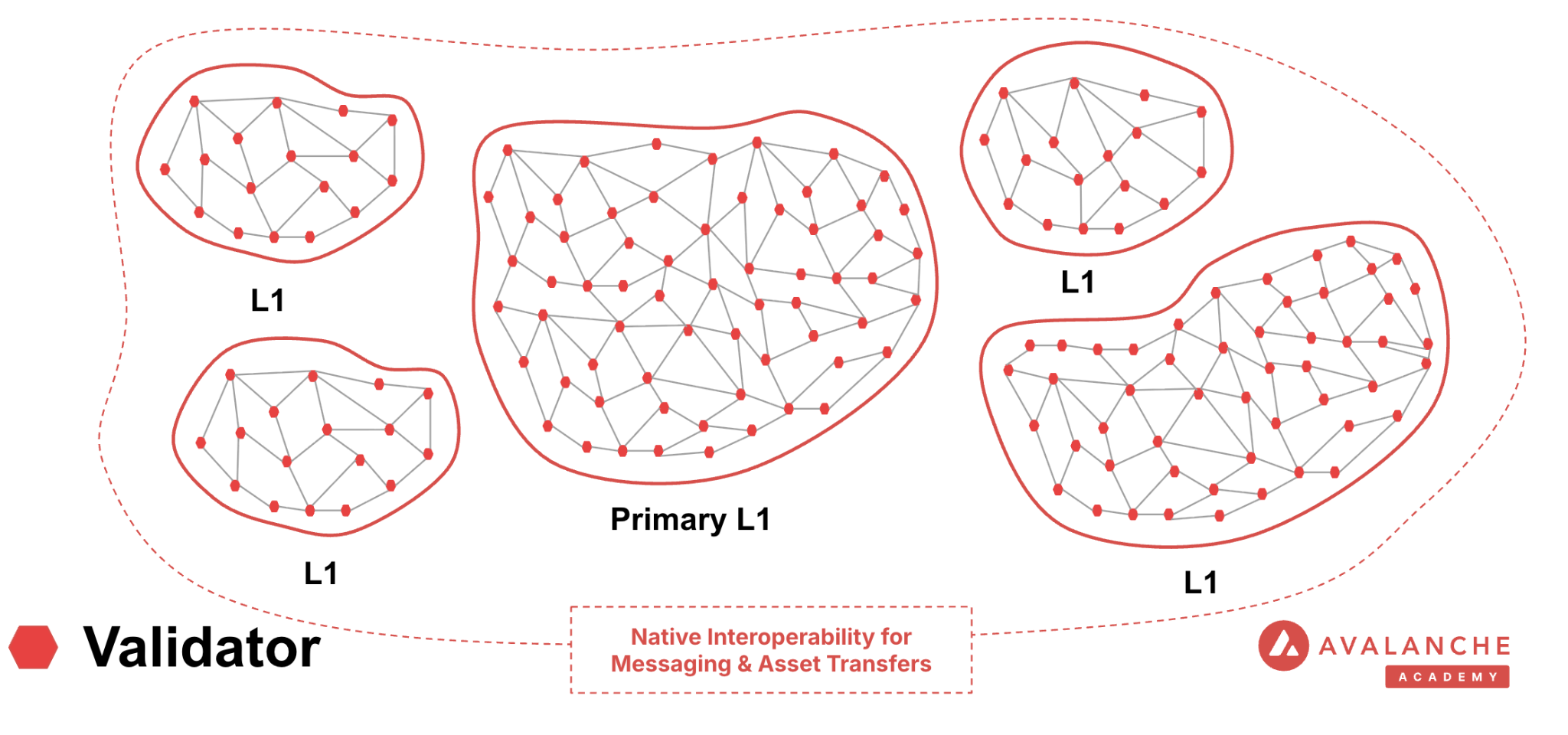
The Primary Network documentation defines Avalanche as a heterogeneous blockchain network. In other words, instead of a structure where all tasks are gathered on a single chain, an architecture was preferred in which different tasks are separated into different chains.
This preference also makes sense in the case of the X-Chain. Because asset creation and transfer logic do not have the same needs as smart contract execution. Likewise, validator management is a completely different layer. When all of these are gathered in one place, both technical design and performance logic get mixed together. On the AvalancheGo Architecture page, it is seen that this separation is important in terms of modularity and parallel operation.
This is why keeping the X-Chain separate matters. Because Avalanche adopts not the approach that one chain should do every job, but the approach that each job should be optimized in its own area. In this architecture, the X-Chain is the special layer allocated to asset operations.
Why Does It Matter in Terms of Consensus and Transaction Logic?
For a long time, the X-Chain was known in the Avalanche ecosystem for its asset transfer-focused structure. In the Flow of a Single Blockchain guide, it is explained that the X-Chain is used for asset management and is associated with Avalanche consensus. By contrast, in the more recent AvalancheGo Architecture document, it is stated that the X-Chain became linear with Snowman after the Cortina upgrade. This detail matters because understanding the X-Chain is related not only to the question of what transaction it performs, but also to the question of within what kind of chain structure it carries out that transaction today.

The X-Chain is seen to be associated with high throughput and scalability logic. This emphasis on throughput and scalability helps explain why asset operations have a dedicated place in Avalanche’s architecture.
Why Does It Matter for Avalanche?
The importance of the X-Chain for Avalanche is that it shows the network is not made up only of smart contracts. On Avalanche, value does not only operate on contracts. At the same time, assets also need to be issued, moved, and managed according to different use cases. The X-Chain carries exactly this area.
While the Primary Network page describes the X-Chain as the base layer for Avalanche Native Tokens, the official support article about the X-Chain emphasizes its role on the asset exchange and cross-chain transfer side. When we think about these two together, the place of the X-Chain in the Avalanche architecture becomes clearer. The C-Chain carries the application face. The P-Chain carries network organization. The X-Chain carries the core logic of value and asset flow.
For this reason, the X-Chain is not only an old or background part of Avalanche. It is still one of the critical layers for understanding why the network’s multi-chain design was established.
Conclusion
Understanding the X-Chain means looking beyond a wallet balance to the rules and transaction model behind an asset’s creation and movement.
Technical Terms Mentioned in the Text
Avalanche Native Tokens
They are digital assets that can be created natively on Avalanche.
AVM
It is the Avalanche Virtual Machine that runs the X-Chain.
UTXO Model
It is a transaction model that tracks value with the logic of spendable outputs instead of collecting balance in a single account.
Cross-Chain Transfer
It refers to moving assets between different chains or connected structures within the network.
Further Reading
Dive into the Avalanche ecosystem today! Download the Core Wallet and unlock a world of seamless DeFi, NFTs, and more.