



For someone hearing about Avalanche for the first time, the P-Chain often seems like the most invisible part of the network. This is because the place users see on a daily basis is usually the C-Chain. The layer where wallets connect, tokens are sent, and applications are used is most often that one. Yet according to Avalanche’s official Primary Network documentation, the network consists of three main chains, and each of these chains takes on a different role. The P-Chain is the coordination layer of this structure.
In Avalanche Support’s explanation of the P-Chain, the P-Chain is defined as Avalanche’s metadata blockchain. Validator coordination, staking, and L1 records all live here. It is the least visible chain from the user side and still the one that decides who validates the network and which chains are part of it.
What Does P-Chain Do?
As explained on the Primary Network page and in the PlatformVM Architecture documentation, the role of the P-Chain is centered around a few main jobs.
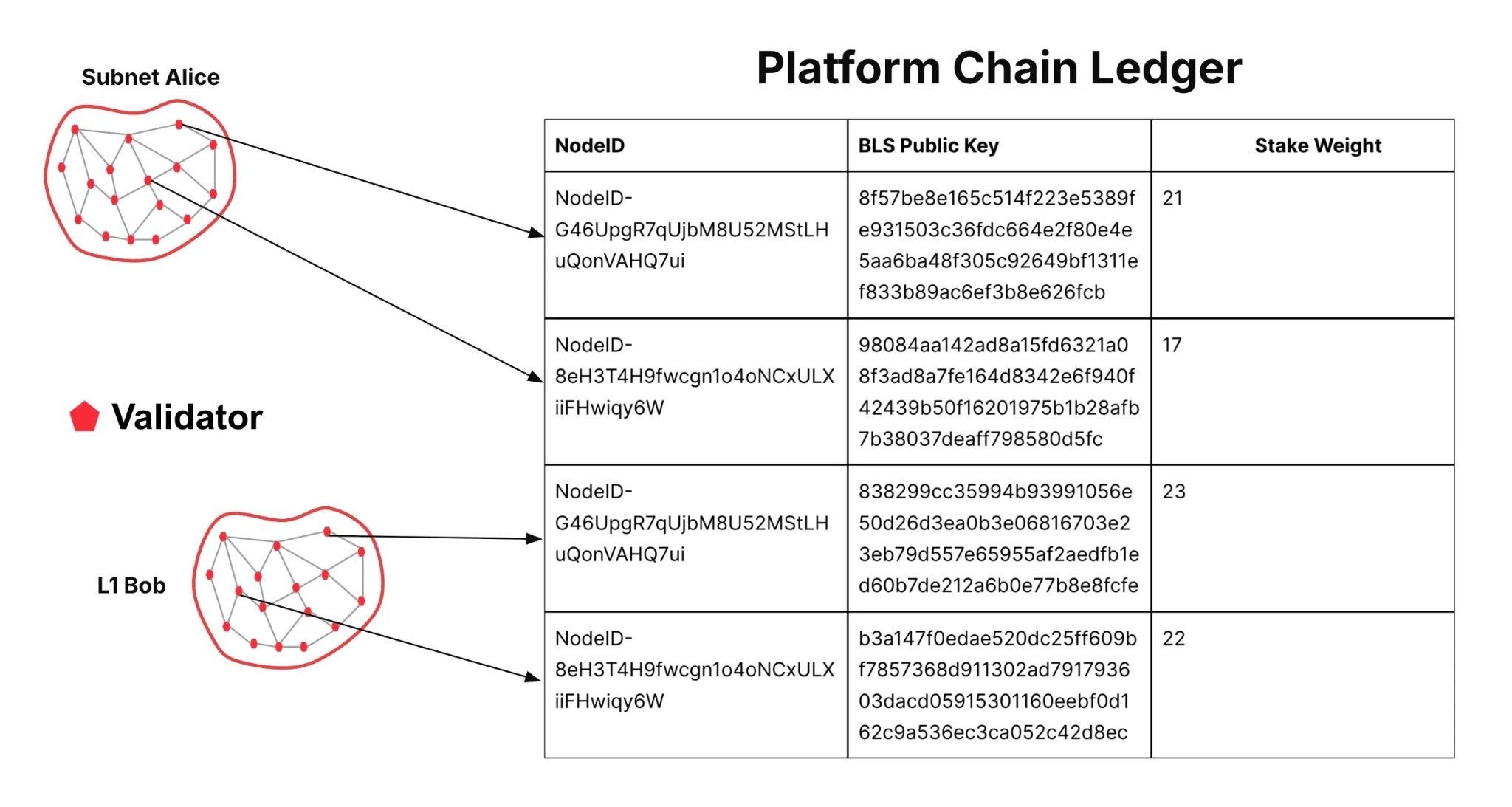
It records Primary Network validators and delegators
It manages staking operations and the reward logic
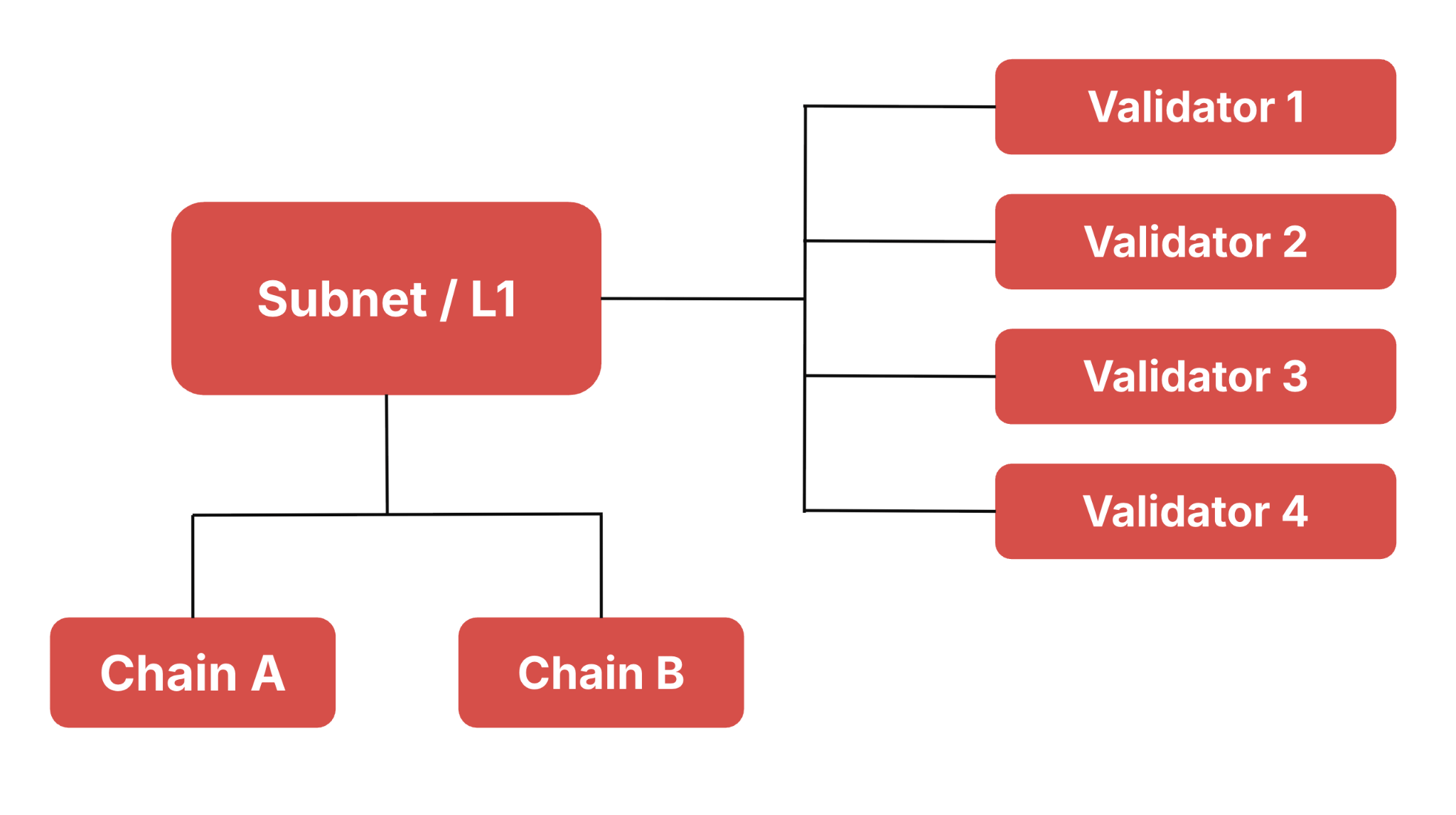
It makes the creation of new blockchains and Avalanche L1s possible
It carries L1 membership, chain creation, and network-level state information
At first glance, these duties may seem far away from the end user. But in fact, a large part of the question of how Avalanche works is answered here. It is not enough for a network to simply produce transactions. Who will be a validator, how staking will work, how a new chain will be added to the system, and how this structure will be coordinated are all just as critical as user transactions. The P-Chain manages exactly this area.
On the technical side, the PlatformVM Architecture page also shows that the P-Chain is not limited to staking and validator registration alone. The same document explains that cross-chain platform functions such as warp signing and atomic transfer are also related to this layer. This shows that the P-Chain is not just a staking chain, but the layer that carries the platform logic of the Avalanche architecture.
Who Uses the P-Chain?
The P-Chain is used most by four groups.
The first is validators and delegators. Because as stated in the official support article explaining the differences between the X, P, and C-Chains, the P-Chain is used for staking. If you are joining a validator or participating in the network as a validator, the staked AVAX and the reward logic take shape in this layer.
The second group is node operators and infrastructure teams. The AvalancheGo P-Chain RPC documentation shows that the P-Chain API is used for interaction with validator sets, blockchain creation, and staking data. So the P-Chain is not only a theoretical architectural component, but also an operational layer that is directly touched on the infrastructure side.
The third group is teams that want to build their own Avalanche L1. The Primary Network documentation says that the P-Chain supports the creation of new blockchains and Avalanche L1s. For this reason, the P-Chain is one of the main entry points for anyone who wants to establish a new sovereign network on Avalanche.
Institutions are another important group, especially those building regulated or specialized networks. Avalanche’s official L1 documentation describes use cases where an L1 can require validators to be located in a specific country, pass KYC/AML checks, or hold a license. Concrete examples in Avalanche’s official ecosystem materials include the Dinari Financial Network and Intain, which provides infrastructure for tokenizing and managing asset-backed securities. In this type of institutional setup, the P-Chain handles validator membership and network-level registration, while the institution’s financial or application logic runs on the L1 itself.
The fourth group is end users in an indirect way. Someone using a daily dApp usually interacts not directly with the P-Chain, but with applications and wallet interfaces on the C-Chain. But if they are staking, delegating to a validator, or taking part in an L1 ecosystem within Avalanche, the validator, staking, and network organization rules behind that experience are largely shaped on the P-Chain side. In other words, the user usually does not see the P-Chain as a separate screen or a separate application layer, but some core network rules still operate through the P-Chain.
How Is the P-Chain Different from the Other Two Chains?
The best way to understand the difference here is to separate the three chains according to their roles.
C-Chain, is the execution layer where smart contracts and application logic run
X-Chain, is used for the creation and transfer of digital assets
P-Chain, manages validator and Avalanche L1-level operations
The P-Chain is not a smart contract chain. It is not the main stage of daily DeFi transactions. It is not the main area for token creation either. It is the layer where platform rules inside Avalanche are processed.
What Do We Mean by Rules on the P-Chain?
Here, by rule, what is meant is not the guidance written in a wallet interface, but the protocol logic that accepts or rejects the network’s platform-level operations. In other words, when a user, operator, or team starts a transaction, whether that request will be considered valid is ultimately determined by the rules of the P-Chain.
Let us think about this with a concrete example. Say a node operator wants to become a Primary Network validator. On the Primary Network page, it is explained that this works through staking. On the PlatformVM Architecture page, transaction types such as AddValidatorTx and AddDelegatorTx are listed. In practice, the wallet or the tool being used only sends the request. Whether this request is accepted by the network as a valid validator record, how it is written into the validator set, and how the staking process will be handled are determined on the P-Chain side. So the user starts a transaction on the screen, but the layer that gives that transaction its network-level meaning is the P-Chain.
The same logic also applies when creating a new Avalanche L1 or a new blockchain. The fact that transaction types such as CreateSubnetTx and CreateChainTx appear in the same document is not accidental. This shows that a new network is not just a configuration screen opened in a panel. Which chain is created, which validator structure it is associated with, and how it is defined within Avalanche are processed and recorded on the P-Chain.
For this reason, it is more accurate to say that the P-Chain is the place where rules are processed. Because the issue here is not only storing data. Which platform transaction is valid, which membership is considered active, and which network operation is included in the system are finalized in this layer.
While Avalanche Support’s article on the differences says that the P-Chain is used for staking, the Primary Network page explains that validator and L1-level operations run here. When you read these two explanations together, the picture becomes clear. The C-Chain is the application layer. The X-Chain is the asset layer. The P-Chain is the network management and coordination layer.
Why Was the P-Chain Designed as a Separate Chain?
The Primary Network documentation defines Avalanche as a heterogeneous blockchain network. In other words, instead of a homogeneous model where everything is collected into a single chain, an architecture was preferred where different tasks are carried out on different chains.
This choice is not random. Smart contract execution, asset transfer, validator registration, and staking are not the same kind of workload. When you collect all of them on a single chain, technical requirements pile on top of each other and a single bottleneck can affect the whole structure. The AvalancheGo Architecture page also especially emphasizes modularity and the logic of parallel processing across independent chains. This perspective makes it easier to understand why the P-Chain was designed as a separate platform layer.
At a technical level, the PlatformVM Architecture document says that the P-Chain runs on PlatformVM and Snowman++. What this setup has to get right is the orderly execution of platform operations such as validator management, staking flow, L1 membership, and chain creation. Keeping the P-Chain separate lets Avalanche’s network logic run without getting mixed up with application logic.
Why Does It Matter for Avalanche?
The importance of the P-Chain comes from the fact that Avalanche is not just a single chain, but a broader network made up of connected chains and L1s. If you want to create a new L1, add a validator, manage staking, and keep some core records at the chain level, the P-Chain becomes the center of these tasks. For this reason, the P-Chain is one of the layers carrying Avalanche’s growth logic.
The PlatformVM Architecture page also explains that the P-Chain plays a role on the signing side for warp messaging and supports atomic transfer operations. This shows that the P-Chain is not just a passive chain that stores records. It also has infrastructure-level importance in cross-chain interaction.
Conclusion
The P-Chain is the platform and coordination layer inside Avalanche. What makes it important is not that it is the chain users see the most, but that it manages who validates the network, how staking is processed, and how new blockchains are created. While the C-Chain carries the application face and the X-Chain carries the asset logic, the P-Chain takes on the network-level organization of this whole structure. For this reason, the P-Chain is not only one of Avalanche’s technical parts. It is one of the main layers that explains why Avalanche can build a modular, multi-chain, and L1-focused architecture.
Technical Terms Mentioned in the Text
PlatformVM
It is the virtual machine that runs the P-Chain and handles validator management, staking, and chain creation logic.
Validator
It is the actor that participates in securing and validating the network.
Avalanche L1
It is a sovereign blockchain network with its own validator and network-level rules.
Staking
It is the allocation of AVAX under specific rules to contribute to the security of the network.
Warp Messaging
It is the native communication mechanism that enables messaging between Avalanche L1s.
Further Reading
Dive into the Avalanche ecosystem today! Download the Core Wallet and unlock a world of seamless DeFi, NFTs, and more.