



In the blockchain world, some concepts are used so often that, over time, everyone starts acting as if they already know them. L1 is one of them. Yet when talking about Avalanche today, leaving this concept at the surface means missing the real difference. Because Avalanche approaches the idea of Layer 1 not only as a “main chain,” but as a more flexible and more modular network model.
That is why it is necessary to start with the most basic question first: what is L1?
What Is L1?
In Ethereum’s official What is layer 2? explanation, Layer 1 blockchains are defined as the base networks that Layer 2 projects are built on top of, such as Ethereum and Bitcoin. On the same page, it is also explained that Ethereum, as an L1, includes the nodes that validate the network, block producers, transaction history, and the consensus mechanism. To put this in simpler terms, L1 is the main blockchain layer that provides its own security and transaction validation by itself. It does not live on top of another chain, it works by its own rules, and it serves as the foundation for upper-layer solutions.
Today, when most people say L1, they think of a single main network such as Ethereum, Bitcoin, or Avalanche. In other words, the everyday use of the concept mostly rests on the idea of a “base chain.” This is not wrong. However, from this point on, Avalanche takes the concept in a different direction.
What Is Avalanche L1?
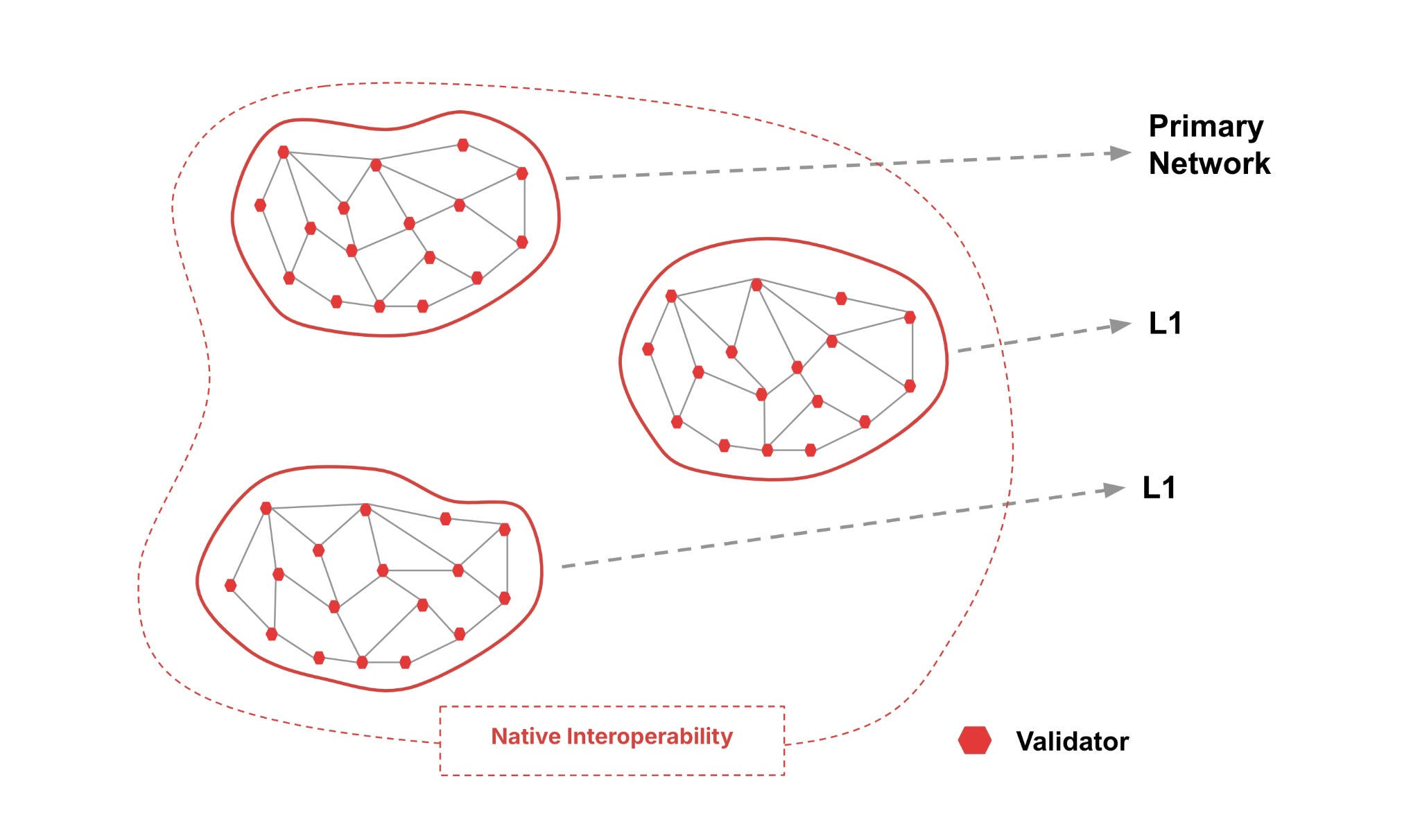
According to Avalanche’s official Avalanche L1s documentation, an Avalanche L1 is a sovereign network that defines its own membership rules and token economy. This network is validated by a dynamic subset of Avalanche validators and reaches consensus on the state of one or more blockchains. The critical difference here is this: in Avalanche, L1 does not mean only a “single chain.” As clearly stated in the same documentation, while each blockchain is validated by exactly one Avalanche L1, one Avalanche L1 can validate multiple blockchains. As a matter of fact, Avalanche’s own Primary Network is also defined as a special Avalanche L1 and runs three separate chains: P-Chain, C-Chain, and X-Chain.
For this reason, the best way to understand Avalanche L1 is to see it not only as “a main chain,” but as an independent network structure with its own rules, connected to the broader Avalanche ecosystem.
Avalanche Primary Network: A Brief Overview
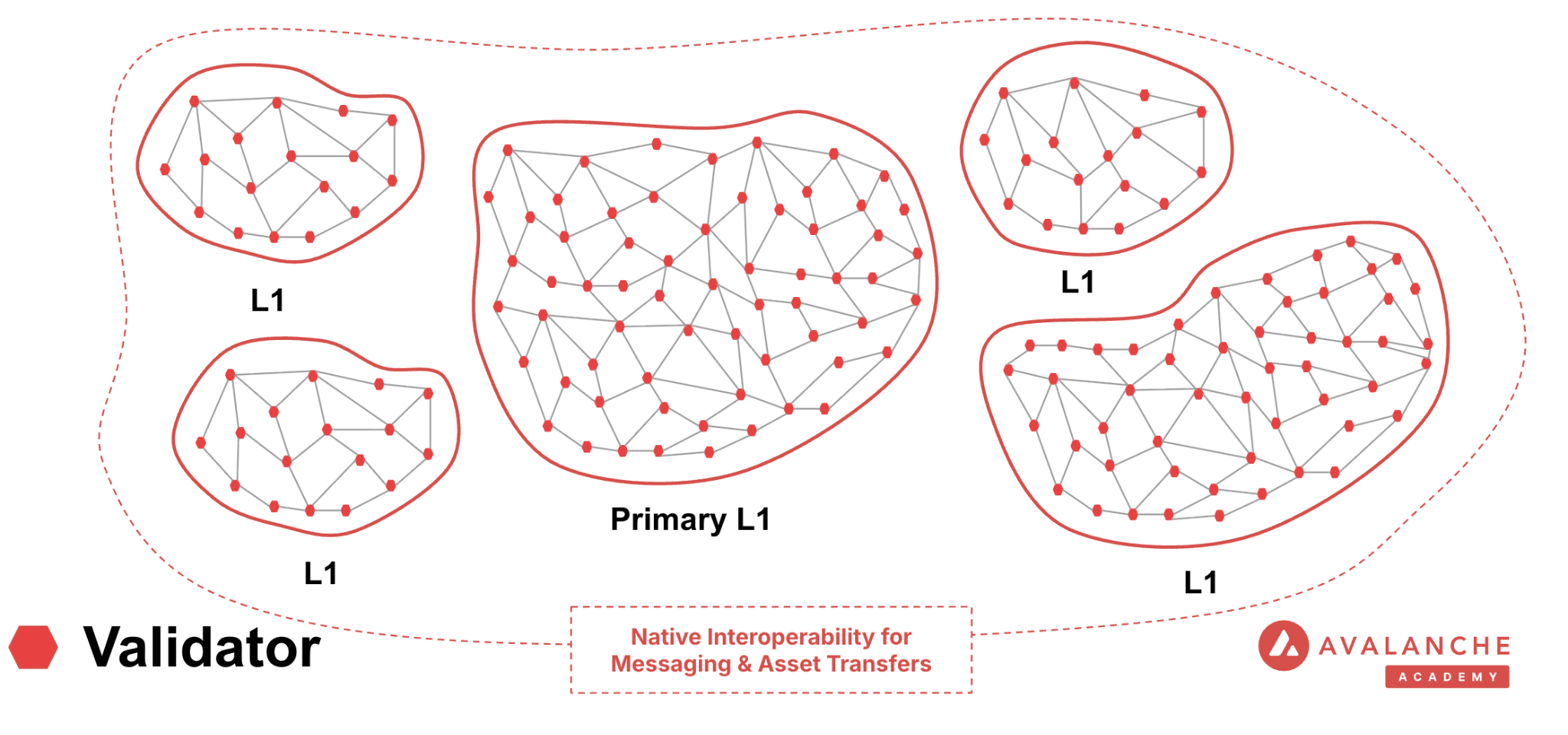
The Avalanche Primary Network is itself a special Avalanche L1 that runs three separate blockchains: P-Chain, C-Chain, and X-Chain, as explained in Avalanche’s official Primary Network documentation.
The P-Chain is responsible for validator management, staking, and Avalanche L1-level operations. The C-Chain provides an EVM-compatible environment for smart contracts and decentralized applications. The X-Chain is designed for the creation and transfer of Avalanche Native Tokens and other digital assets.
This brief overview establishes the role of the Primary Network. The individual functions and technical architecture of the P-Chain, C-Chain, and X-Chain will be covered in separate articles.
Differences Between a Normal L1 and Avalanche L1
1. Classical L1 describes the base chain. Avalanche L1 describes a sovereign network model
In Ethereum’s official explanation, L1 is the base blockchain layer that L2s are built on top of. In other words, the emphasis is on the main chain being the core infrastructure. On the Avalanche side, the official L1 documentation approaches L1 not only as a base layer, but as a sovereign network that can define its own rules, membership structure, and economic model. This gives the concept of L1 in Avalanche a higher level of customization.
2. The classical perception of L1 is mostly single-chain centered, while Avalanche L1 can be multi-chain
In general use, people are used to thinking of L1 as a single main network. In Avalanche, however, one L1 can validate multiple blockchains. Even Avalanche’s own Primary Network example shows this. This difference matters because Avalanche’s architecture offers a structure in which multiple chains can operate within the same ecosystem but according to different needs, instead of the “let one chain grow” approach.
3. Avalanche L1 supports application-specific design more strongly
Not every application has the same needs. While speed and low cost stand out for a payment system, compliance, control, and a more predictable structure may be more decisive for an enterprise financial product. Some use cases want a more open environment, while others need a more limited and more controlled network structure. Avalanche’s L1 approach allows the network to be shaped according to the need instead of forcing these different expectations into a single mold. The ability to customize many elements, from execution logic to fee structure, from the validator model to network behavior, forms the basis of this flexibility. That is why the Avalanche L1 model is particularly striking for payment systems, financial infrastructures, enterprise products, and use cases that require private data.
4. C-Chain is a shared and open environment; Avalanche L1 can be a more controlled alternative
As we saw above, C-Chain is the shared application area on Avalanche. It works close to an open and permissionless structure; that is, developers can deploy smart contracts here and users can interact directly with applications. This is a strong advantage for many applications. However, some projects may need tighter access control, more specific validator rules, or a more controlled operating model. This is where the Avalanche L1 model stands out. Because the application can establish its own network and define in a more controlled way who can transact or who can be a validator.
5. There is performance isolation in Avalanche L1s
On Avalanche’s L1 page, it is clearly stated that the performance of each Avalanche L1 is isolated from the others. In other words, heavy usage on one network does not directly degrade the performance of another Avalanche L1. This is a very important difference in practice. Because congestion on a shared general-purpose chain can affect all applications that share the same area. The Avalanche L1 model, on the other hand, aims to create a more predictable environment by separating certain workloads from one another.
6. Avalanche L1s can have their own gas token model
In the same documentation, it is explained that transaction fees on C-Chain are paid with AVAX, whereas when a custom Avalanche L1 is established, the application can define its own native gas token structure. This difference is especially important for teams that want to build the application economy according to their own needs. Because the issue is not only being present on a chain; it is also being able to control the economic logic of that chain.
7. Validator management becomes more flexible in the Avalanche L1 model
In the Avalanche ecosystem, the PlatformVM architecture shows that P-Chain manages validators, the staking process, and the creation of Avalanche L1s. In addition, Avalanche’s official L1 documentation emphasizes that L1s can define their own validator management logic. This matters not only in theory but in practice. Because while some networks may want permissionless proof-of-stake, others may need permissioned proof-of-authority style structures. Here, Avalanche L1 offers a more flexible framework instead of imposing a single validation model on everyone.
8. Interoperability stands out as a built-in element in Avalanche’s design
In Avalanche’s official ICM Contracts documentation, it is explained that a developer-friendly interface is provided for sending and receiving messages between different Avalanche L1s. Again, on the Avalanche L1s page, it is stated that Avalanche Warp Messaging enables native cross-Avalanche L1 communication. This shows the following: Avalanche does not only want to produce independent networks, but also sees the natural communication of these networks with each other as part of the architecture.
Why Is This Difference Important for Avalanche?
What makes the Avalanche L1 approach valuable is that it treats blockchain not as a single shared space, but as a set of sovereign networks that can be shaped according to different use cases. Some applications want to be open and permissionless. Some want more controlled validator structures. Some want to build their own gas economy. Others seek a structure focused on high throughput, privacy, or compliance. Avalanche’s official documentation highlights the L1 model precisely for these needs. That is why the subject of Avalanche L1 is not only a technical detail. At the same time, it is the core architectural idea that explains why Avalanche often comes up in finance, enterprise infrastructure, gaming, data systems, and specialized use cases.
Conclusion
In the broadest sense, L1 is the base blockchain layer that provides its own security, consensus, and transaction validation by itself. Avalanche takes this basic idea and makes it more modular. Avalanche L1 is not only a “main chain,” but a sovereign network model that can define its own membership rules, validator structure, token economy, and even the logic of validating multiple chains. That is exactly why Avalanche L1 differs from the classical Layer 1 narrative. Here, the issue is not only establishing a new chain, but building networks that are isolated from one another according to different needs, yet able to communicate with one another when necessary. This is where Avalanche’s real difference begins.
Technical Terms Mentioned in the Text
Primary Network
It is Avalanche’s base network. P-Chain, C-Chain, and X-Chain are parts of this structure. It can be thought of as the core network layer in the Avalanche ecosystem.
Validator
It is the actor that participates in the validity of transactions and blocks on the network. Validators provide the security of the network. They play a critical role in the healthy operation of a blockchain.
Consensus
It is the mechanism that allows participants in the network to reach a common decision about which transactions are valid. It is one of the fundamental processes that keep the blockchain secure and consistent.
EVM (Ethereum Virtual Machine)
It is the execution environment where Ethereum-compatible smart contracts run. A network being EVM-compatible means it can work more easily with Ethereum tools and the developer ecosystem.
Permissionless
It refers to a structure in which participation does not require prior permission. In theory, anyone can join the network, use the application, or take on a role by meeting certain conditions.
Permissioned
It refers to a structure in which participation is controlled. Who can access, who can transact, or who can be a validator can be determined in advance.
Interoperability
It means that different networks or systems can communicate with each other.
Throughput
It describes how many transactions a network can process within a certain period of time. High throughput means that more transactions can be carried at the same time.
Further Reading
Avalanche – Motivation behind Avalanche9000
Avalanche – Validator Manager Contracts

Looking to join the global community live? Registration is now open for Avalanche Summit NYC. Secure your pass today for 2 days of exclusive keynotes and networking.
This is such a beautiful breakdown on the concept of L1s. Learnt a few new things. Thank you.
Nice one Meriç ⚡️